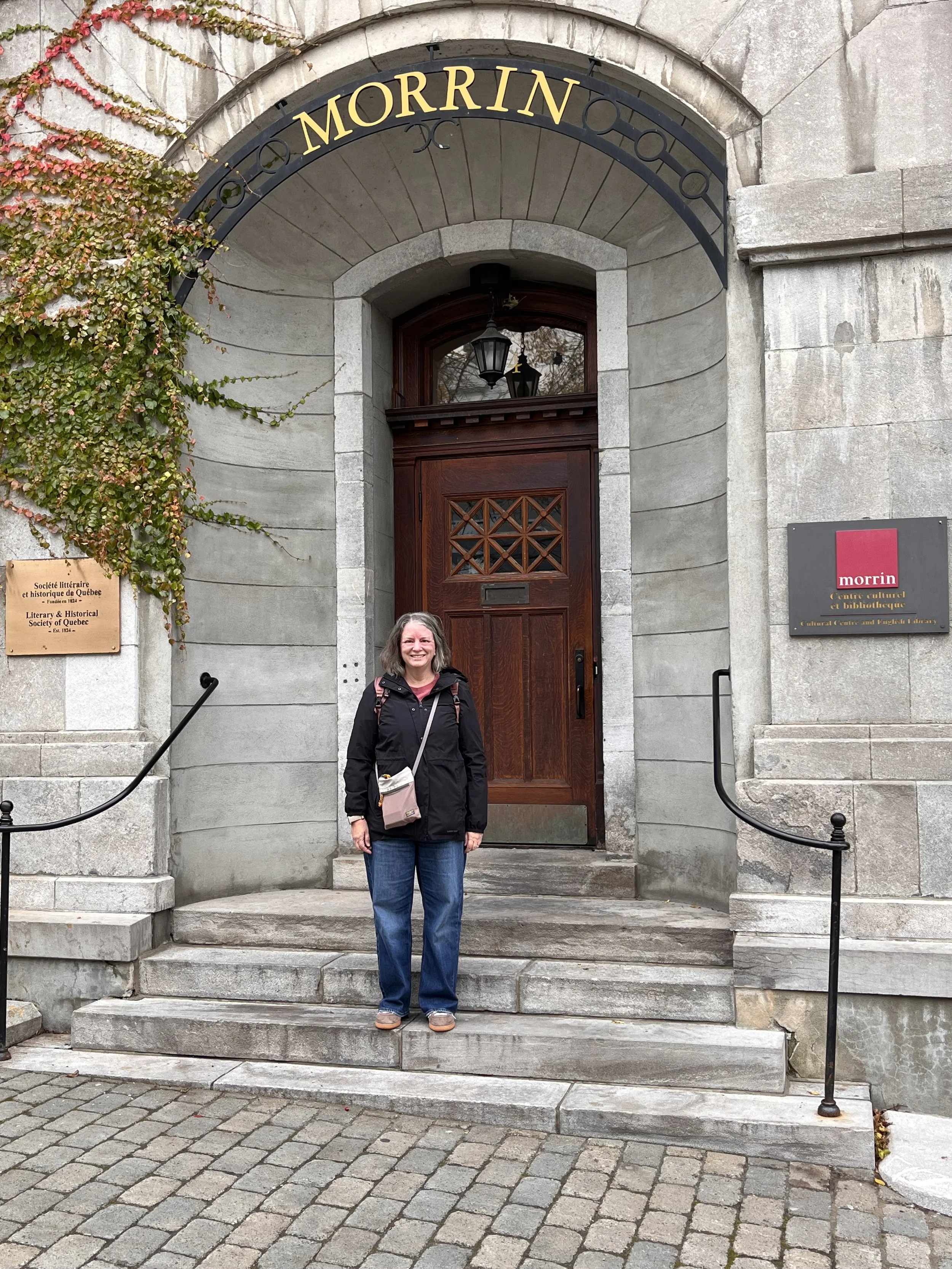
Although we’d known about Louise Penny’s Inspector Gamache mysteries for years, Tim and I only recently started reading them. I’m not quite sure what took us so long, but we’re certainly making up for lost time now!
So when we planned our trip to Québec City, I thought it would be fun to explore a couple of locations featured in the sixth book of the series, Bury Your Dead. We began with a guided tour of the historic Morrin Centre, followed by lunch at Chez Temporel.
What I hadn’t anticipated was just how much we’d enjoy those experiences in their own right. Tina, who hadn’t read the novel, enjoyed the day every bit as much as we did. As it turned out, our little literary-inspired outing was also a wonderful way to discover some of Old Québec’s history, character, and delicious food.
The Morrin Centre: From Prison to Library
We’d booked our morning guided tour of the Morrin Centre ahead of time, and it turned out to be an engrossing hour-long experience.
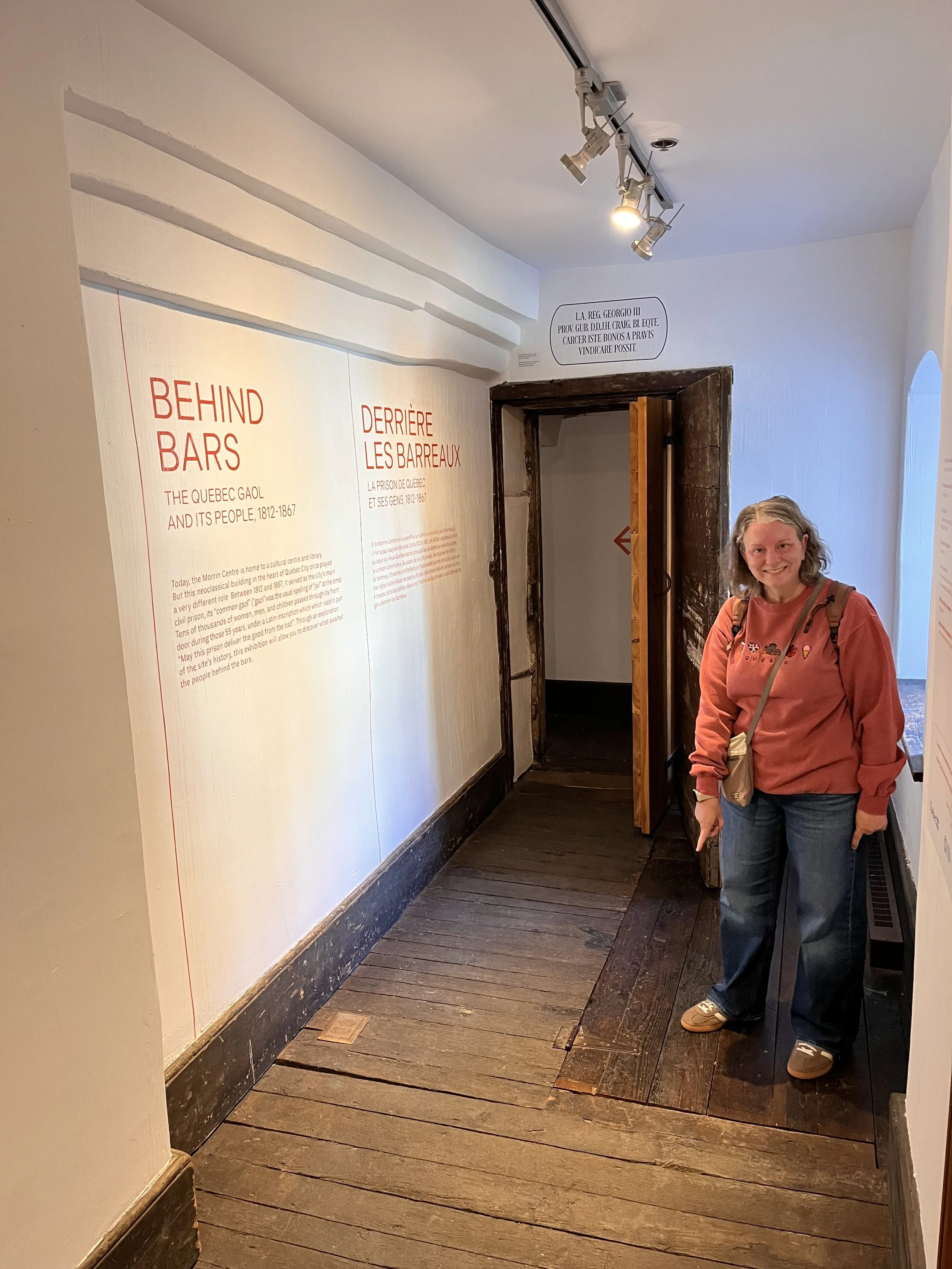
The building has had several very different lives. Originally a jail, it later became home to Morrin College and now houses a magnificent Victorian library. It’s quite a transformation, particularly when you consider the grim stories associated with its earliest years.
Our guide was excellent, bringing the building’s history to life as we explored the former jail cells and learned about the appalling conditions prisoners endured.
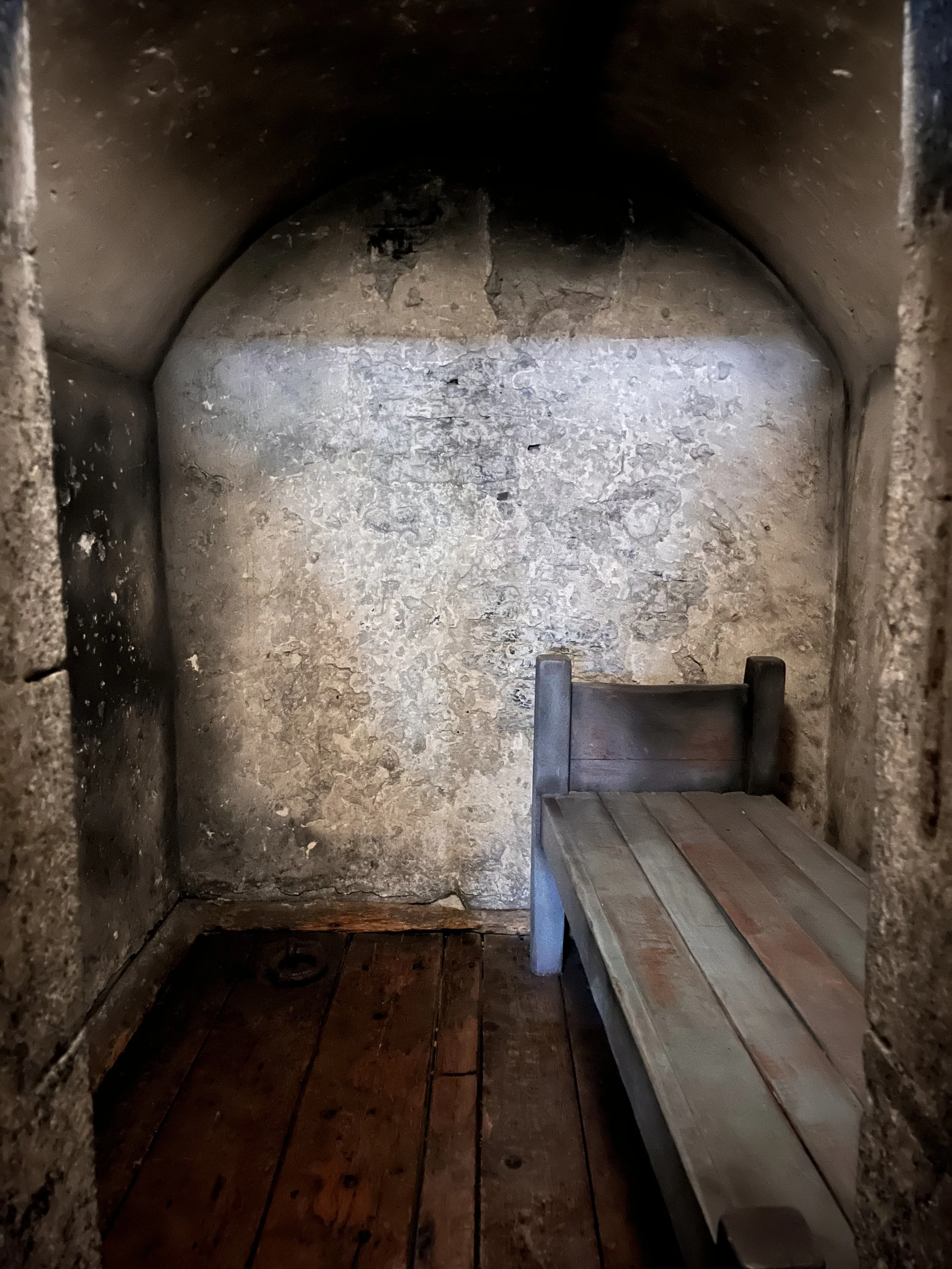
The one part of the prison that wasn’t completely renovated when the college purchased the building was the area known as Death Row. At its most crowded, a cell there might have held as many as ten prisoners, who were forced to sleep in shifts because there simply wasn’t room for everyone to lie down at once.
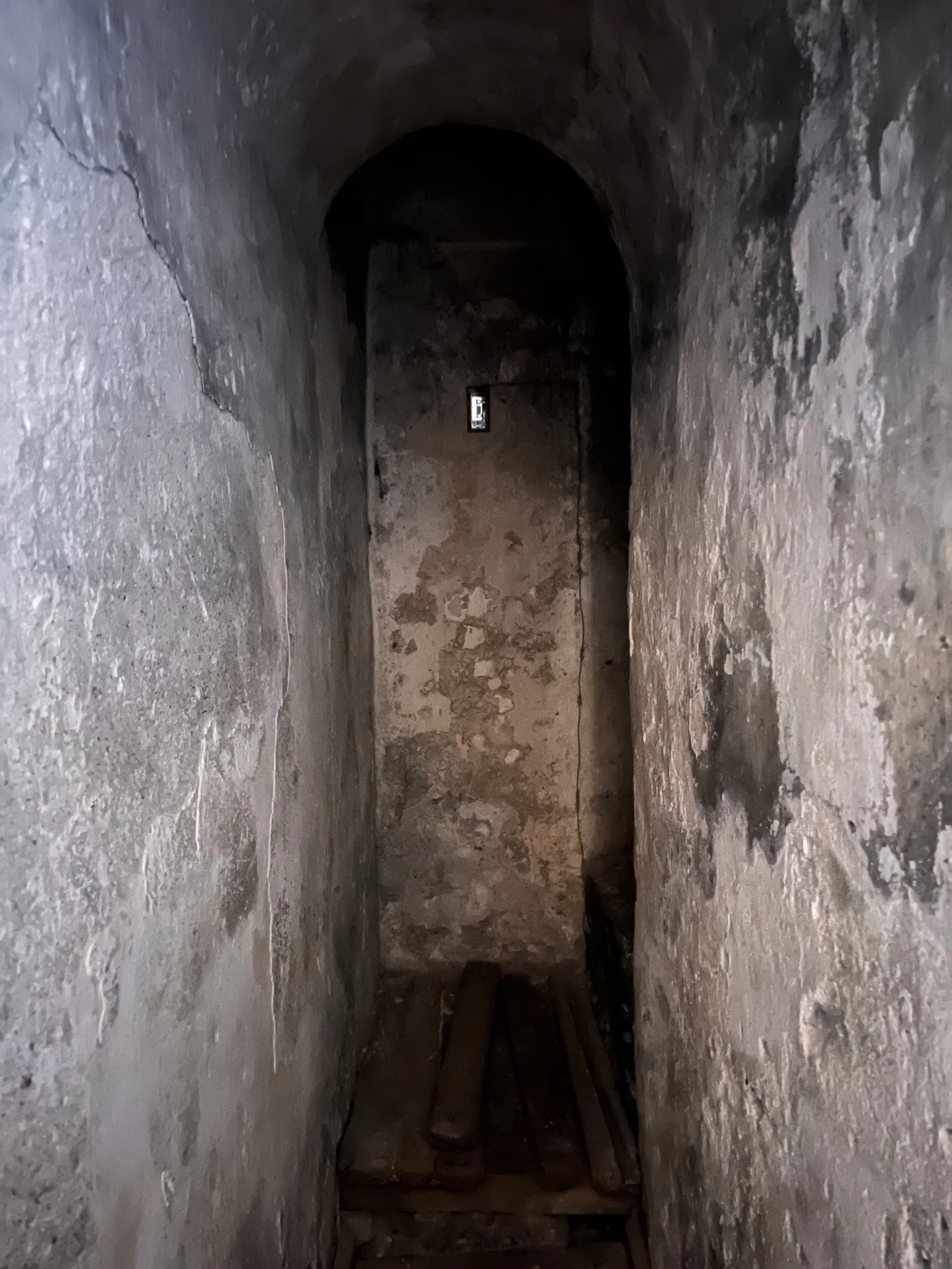
Even more disturbing was the arrangement of the latrines. A narrow passageway led from the cell to an opening above the sewer system, which was shared by all four floors of the jail. Prisoners on the lowest level sometimes had to shout warnings to those above to avoid being showered with waste. It’s hard to imagine living in such conditions, let alone enduring them while awaiting execution.
The photos below show one of the Death Row cells and the narrow passageway leading to the latrine.
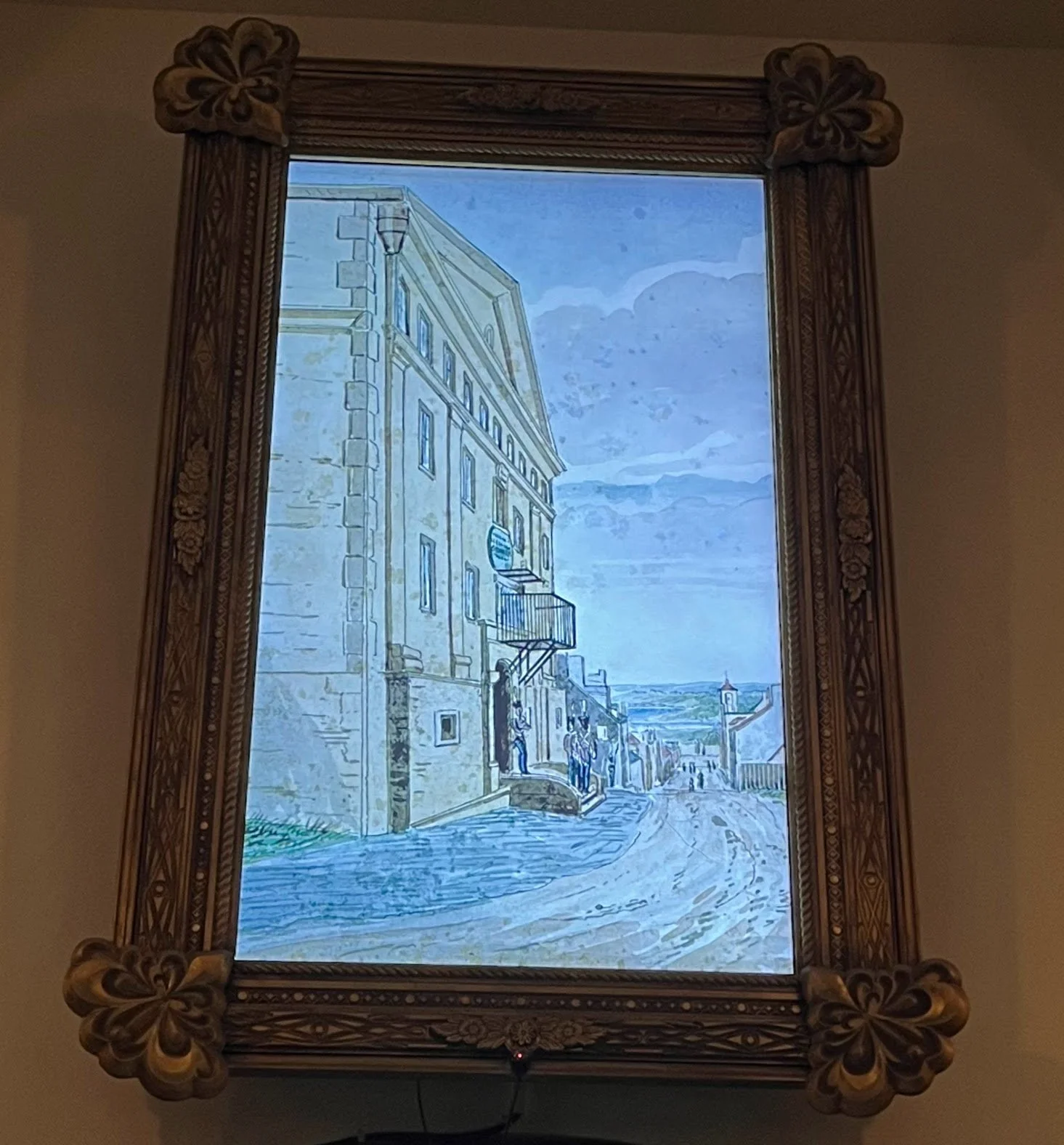
One particularly disturbing detail involved the public executions that once took place at the building. Prisoners were hanged from an iron balcony, with a trapdoor opening beneath them, while crowds gathered to watch. We were told that children were sometimes even excused from school to witness the spectacle. It’s difficult to imagine such an event being considered public entertainment.
The balcony is long gone, but a historical painting of the building helped us visualize how it once looked.
The building’s next chapter was a remarkable change of direction. In 1868, it became home to Morrin College, and several of its historic classrooms have been preserved. One particularly beautiful room is still used for special events, including weddings, while another retains its original blackboards. Both rooms are pictured in the photos below.
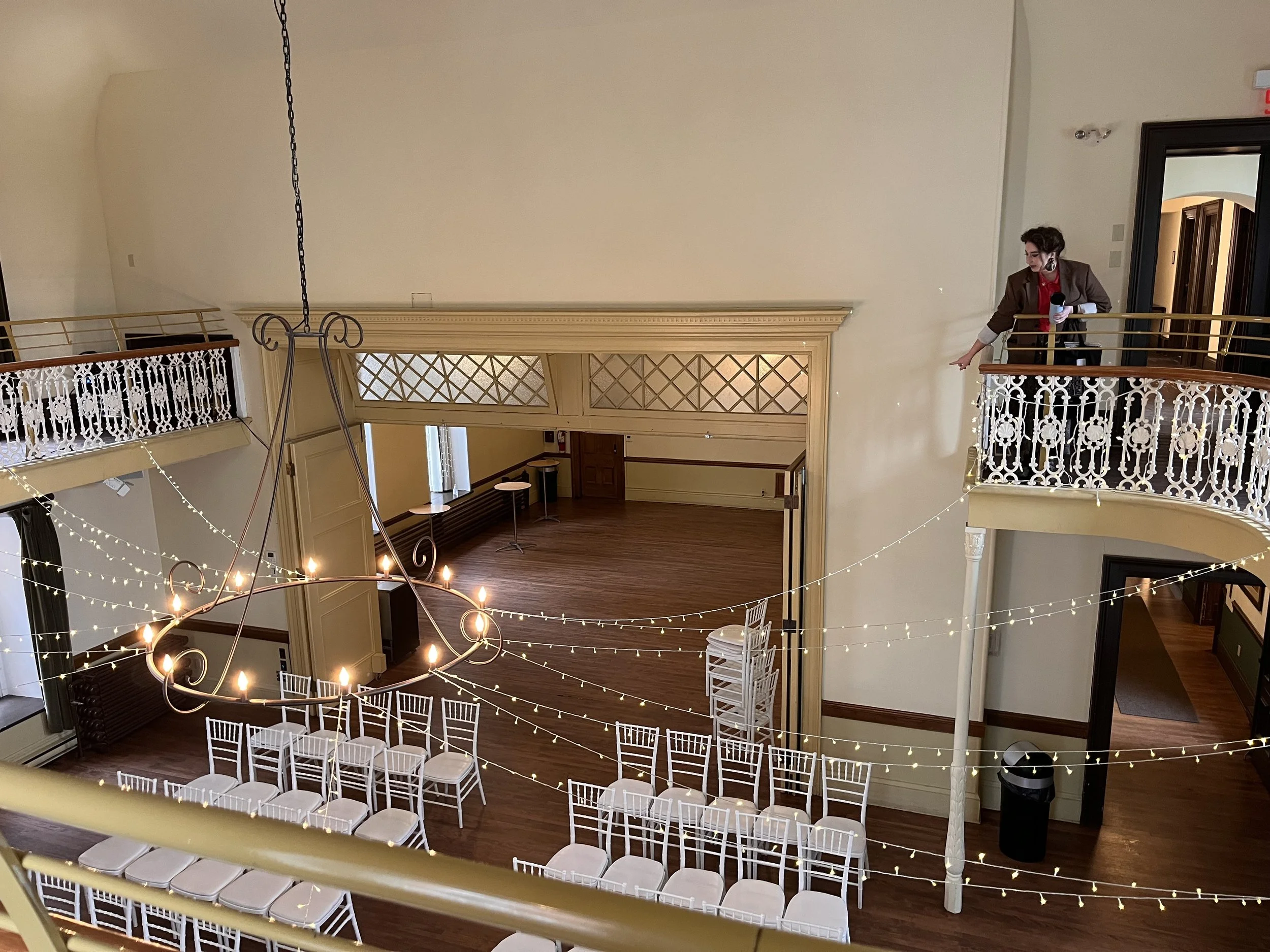
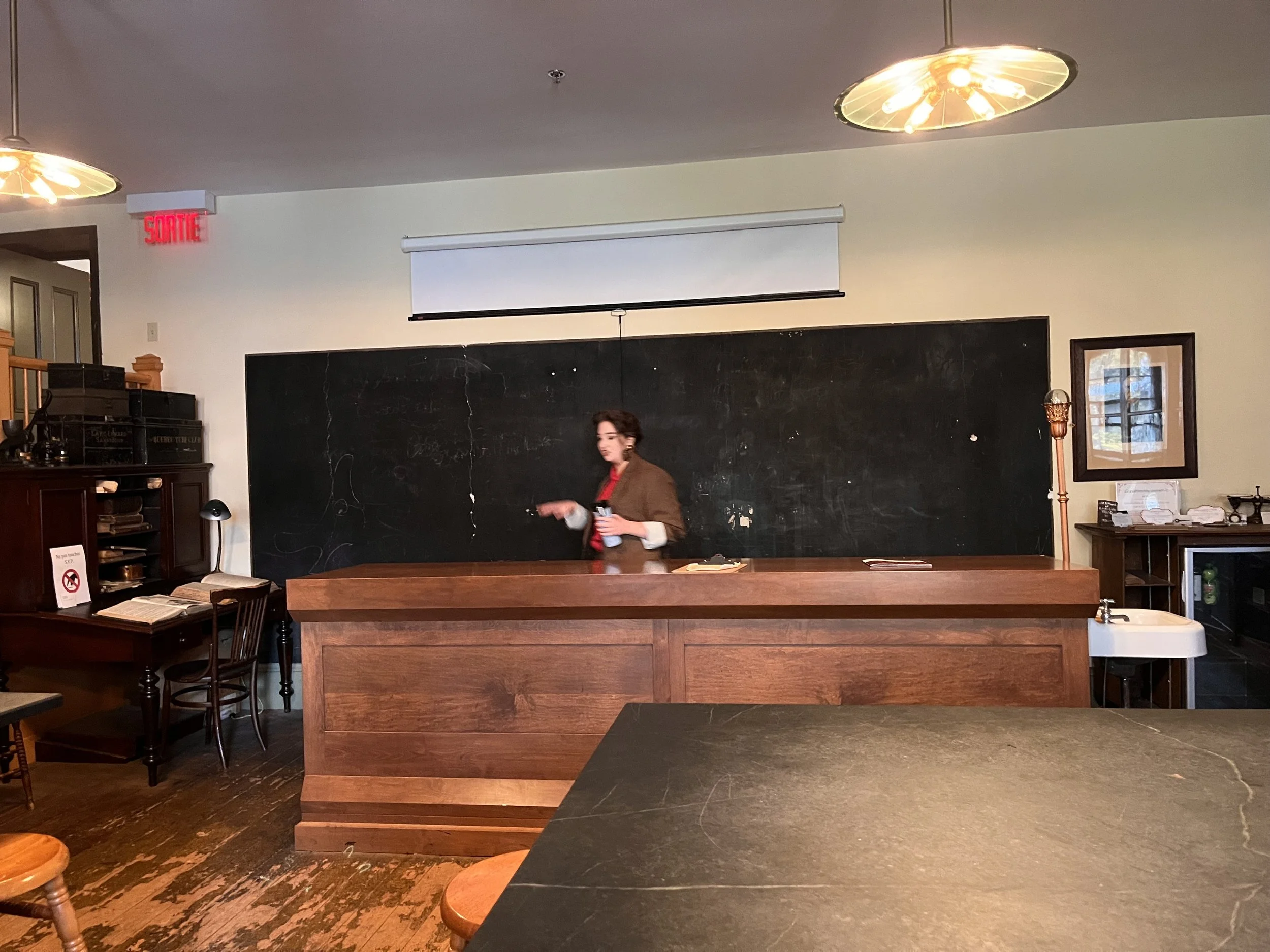
Our guide shared an entertaining story about the college’s efforts to attract additional students. In 1873, it offered a course for women called Domestic Chemistry, which explored the science behind everyday household tasks such as cooking and cleaning. The instructor even used the simple act of making tea to explain chemical principles. Not exactly what you’d expect to learn about on a tour of a former prison!
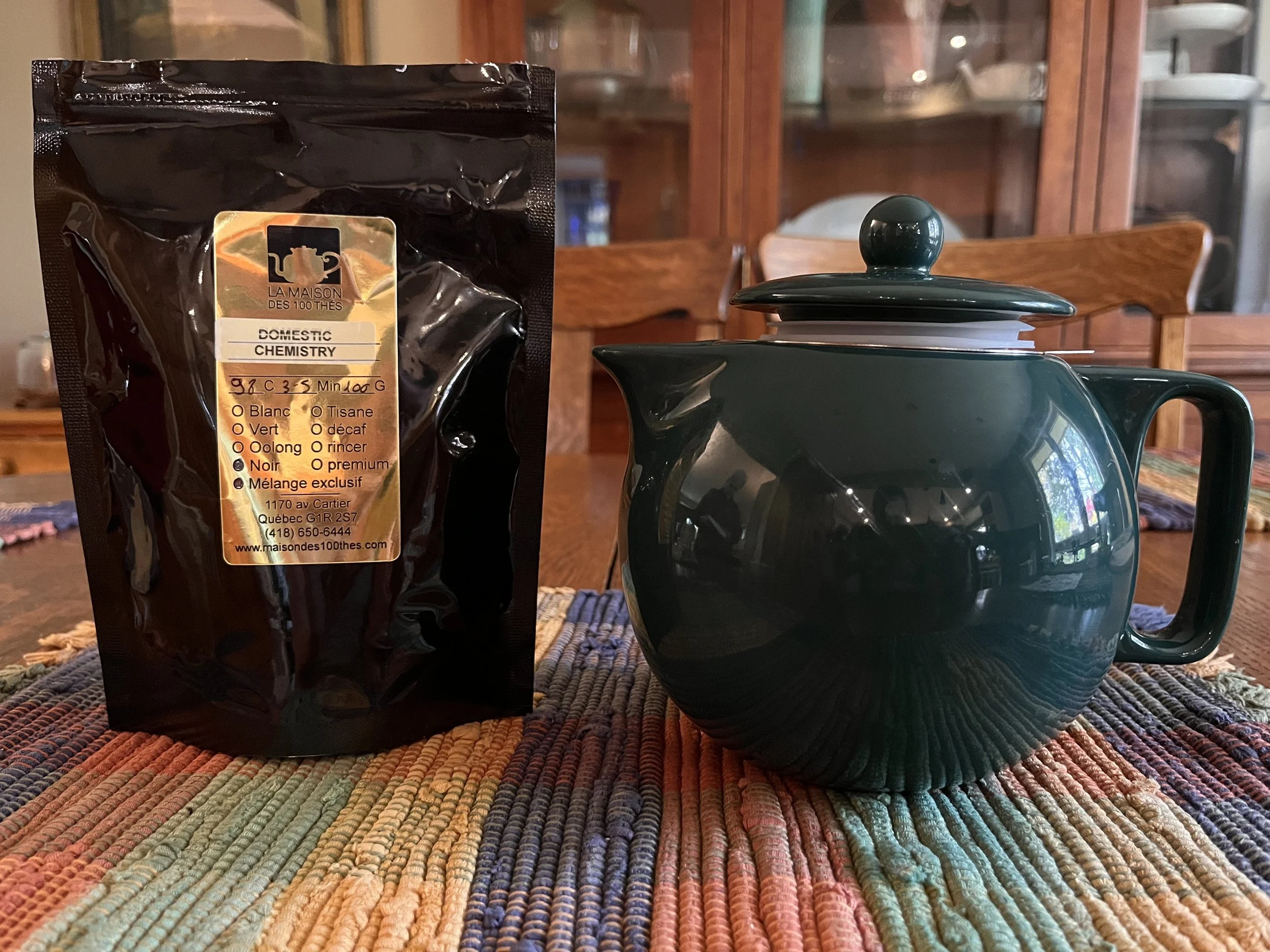
And here’s a little discovery that particularly delighted me: the Morrin Centre has its very own loose-leaf tea blend, appropriately named Domestic Chemistry, available for purchase at the small gift shop near the front desk. Of course, I couldn’t resist bringing some home! Mom and I have been enjoying it together, a unique reminder of my visit.
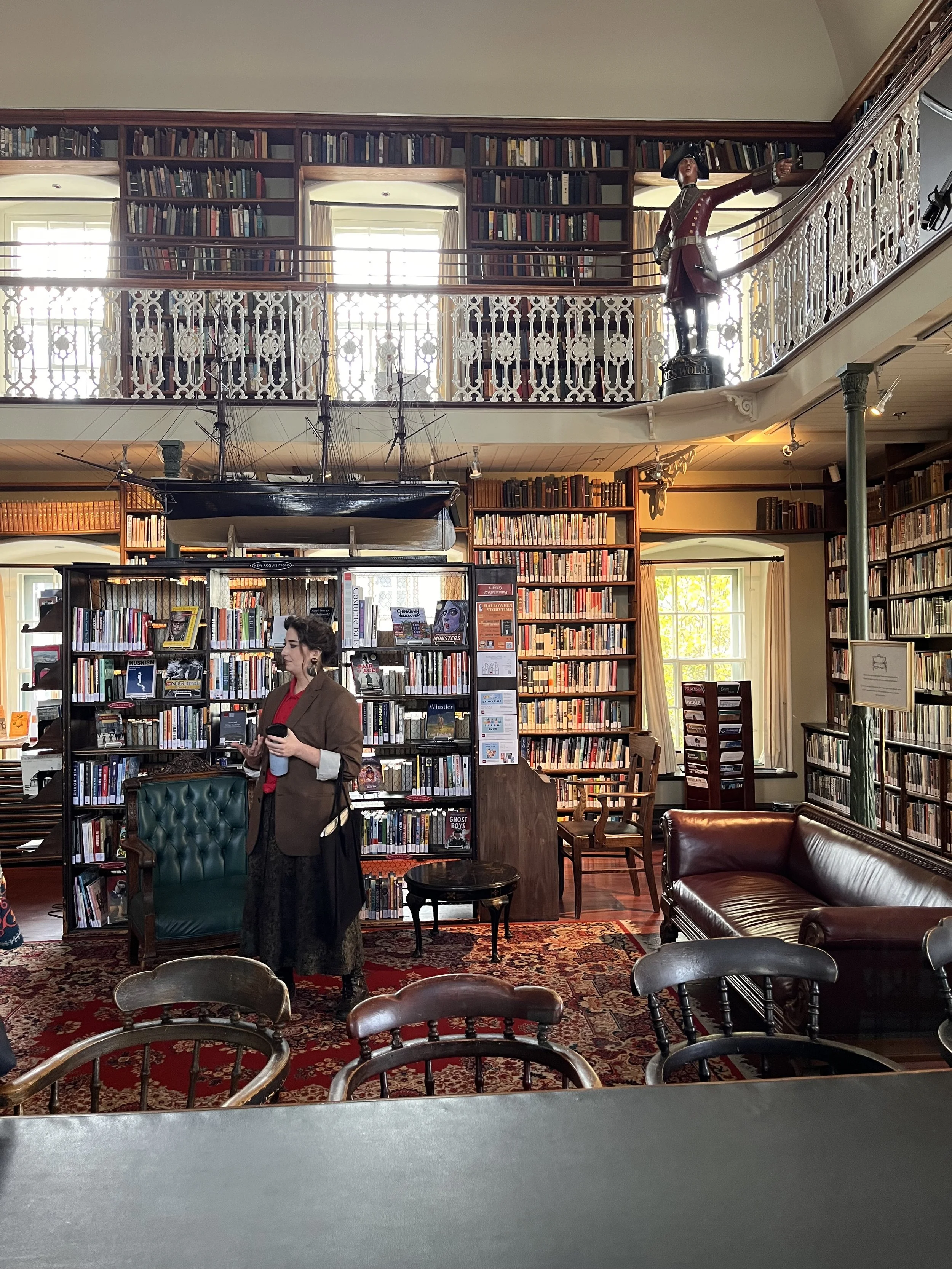
As fascinating as the jail and college history were, the library was undoubtedly one of my favourite parts of the tour. With its soaring bookshelves, ornate ironwork, and warm wood tones, it’s a wonderfully atmospheric space. I could easily have spent much longer there.
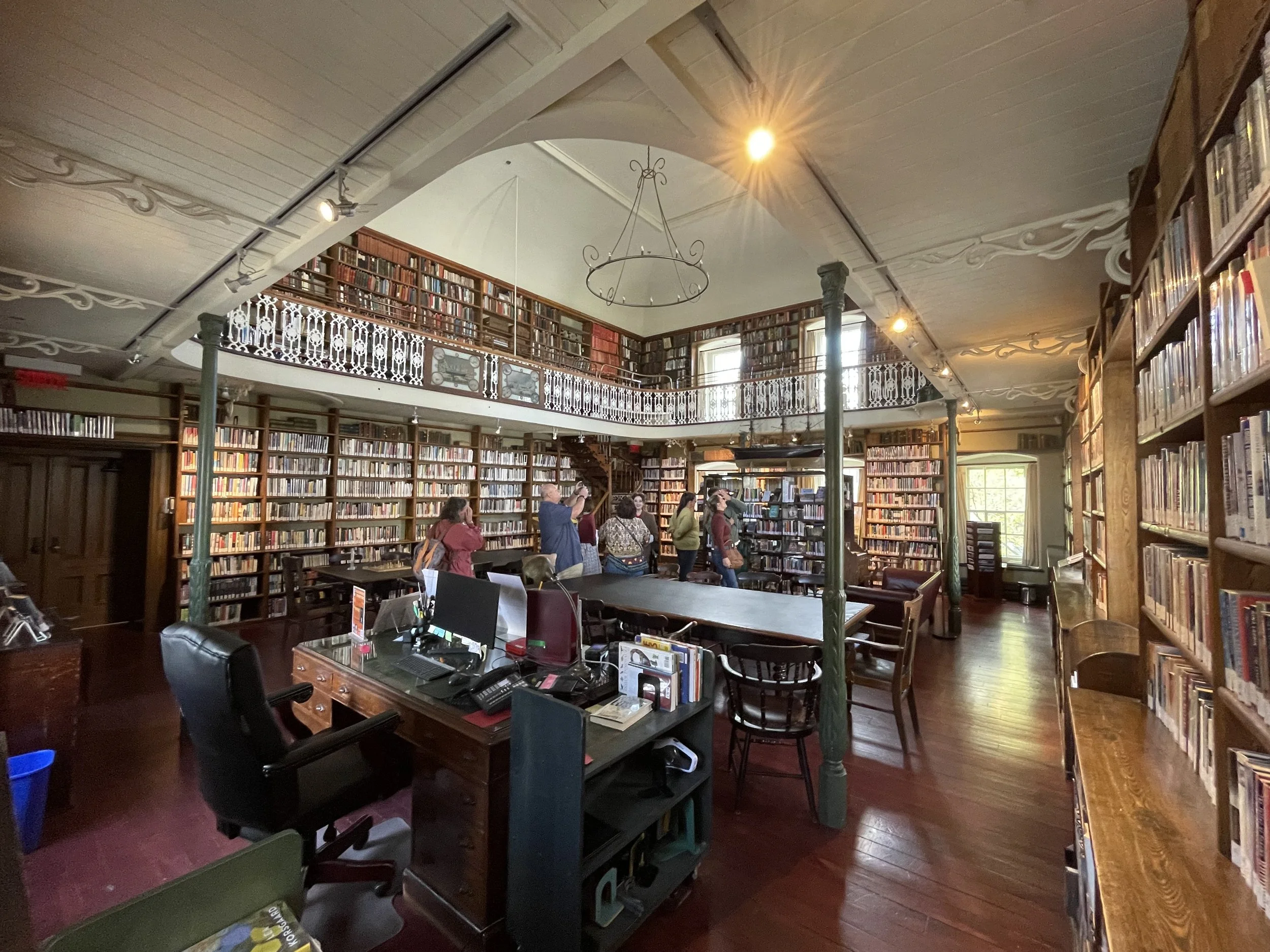
For Louise Penny readers, of course, the library is especially intriguing. The Morrin Centre features prominently in Bury Your Dead, and I particularly enjoyed seeing two familiar figures from the novel.
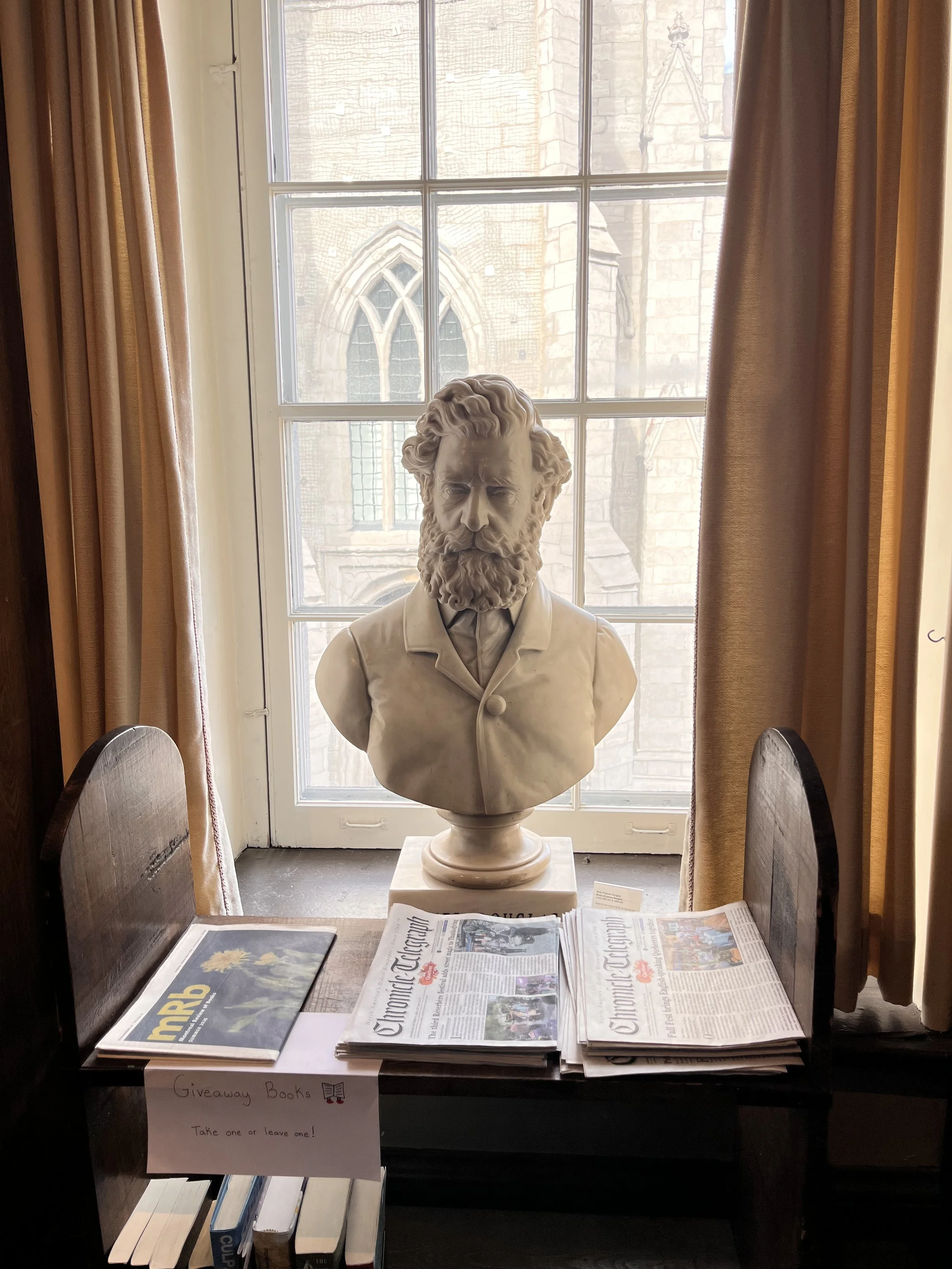
One was the bust of Dr. James Douglas, a nineteenth-century physician with a rather colourful past. Among other things, he had been involved in grave robbing to obtain bodies for anatomical studies and later collected Egyptian mummies. It's quite a story, and one that plays into the mystery of Bury Your Dead.
Then there was the wooden statue of General James Wolfe, which has a remarkable history of its own. Our guide entertained us with the story of how it was stolen from its original outdoor location, disappeared for years, and eventually made its way back to Québec City, where it now presides over the library. You can spot the statue on the upper gallery in the photo below.
The tour itself wasn't focused on Louise Penny at all. The building has more than enough history to justify a visit on its own. But when I mentioned the novel to our guide, she kindly showed us the trapdoor associated with the story—a lovely little bonus for two Inspector Gamache fans!
One thing I discovered is that the Morrin Centre also hosts Victorian-inspired teatime experiences in the library. The thought of enjoying tea and treats surrounded by those beautiful bookshelves is very appealing. I’d love to return for one someday.
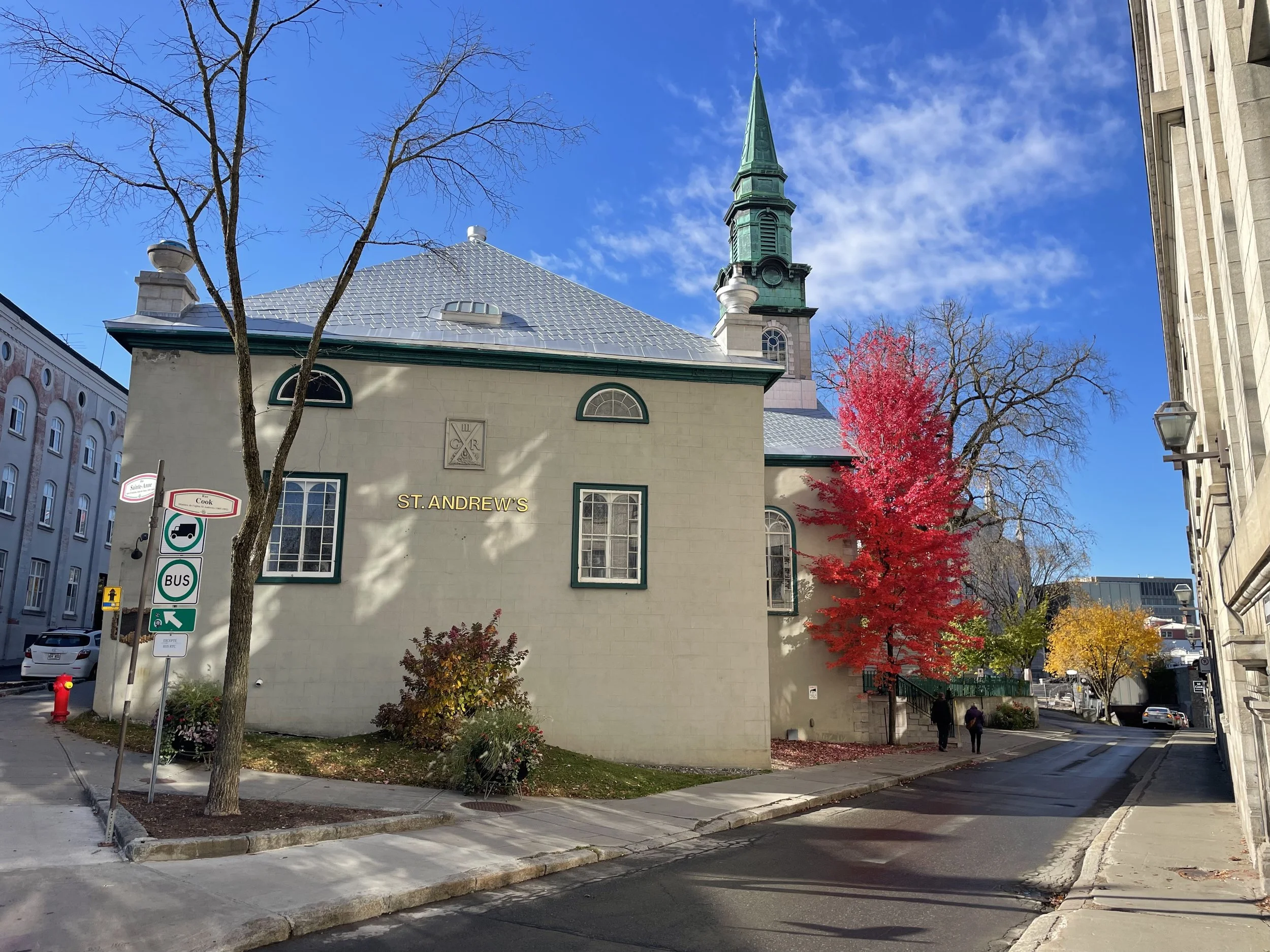
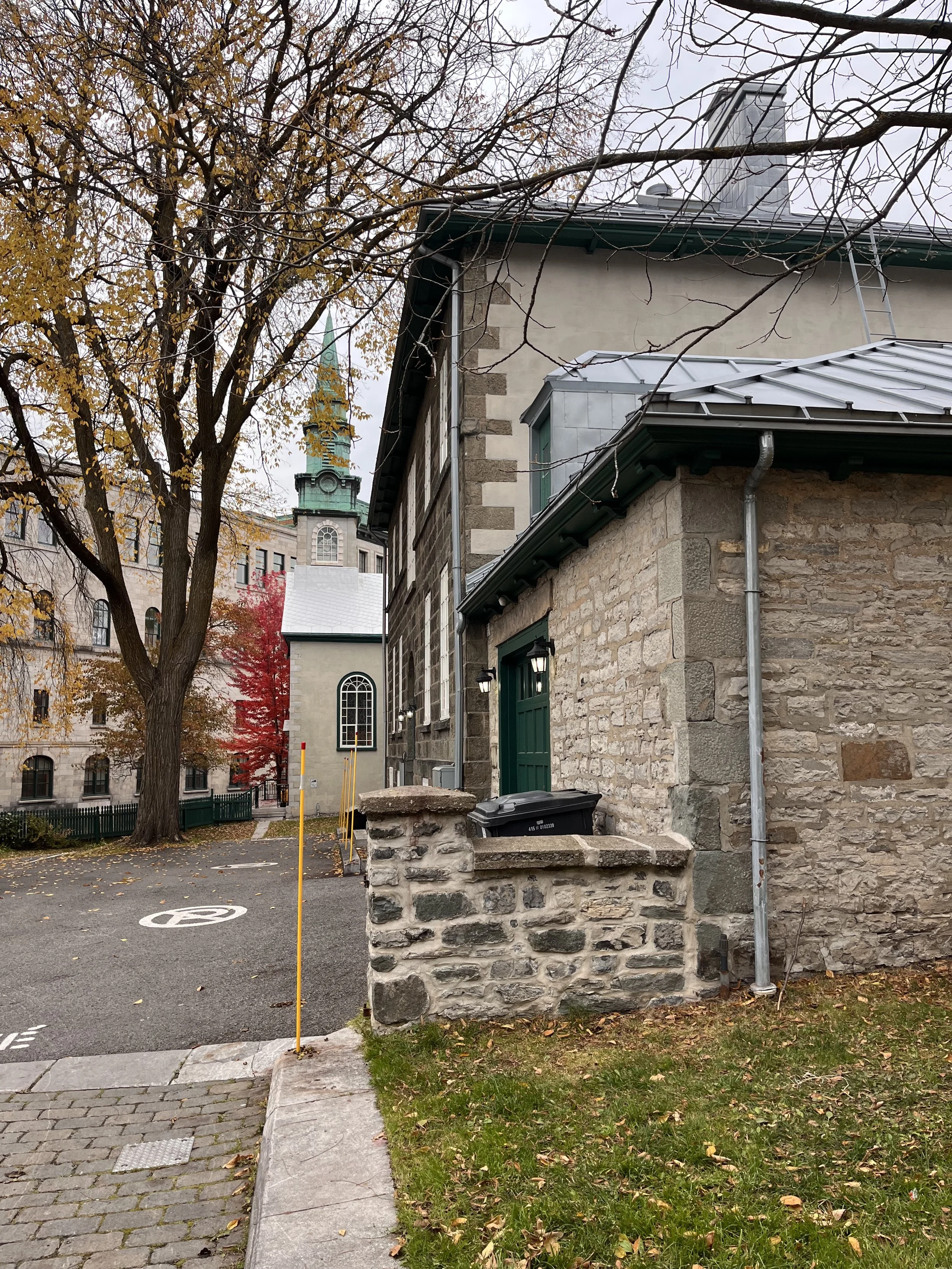
Just steps from the Morrin Centre stands St. Andrew’s Presbyterian Church, another location that plays a role in Bury Your Dead. In the novel, Tom Hancock uses the church as a vantage point to keep watch on the Literary and Historical Society. Seeing just how close the two buildings are made this part of the story especially interesting to me. The photos below show the church from two perspectives, including a view of it from the Morrin Centre.
Chez Temporel: A Delicious Literary Discovery
For lunch, I'd decided to look for a restaurant with a connection to Louise Penny's novels. That search led us to Chez Temporel, a cozy little restaurant tucked into the historic streets of Old Québec.
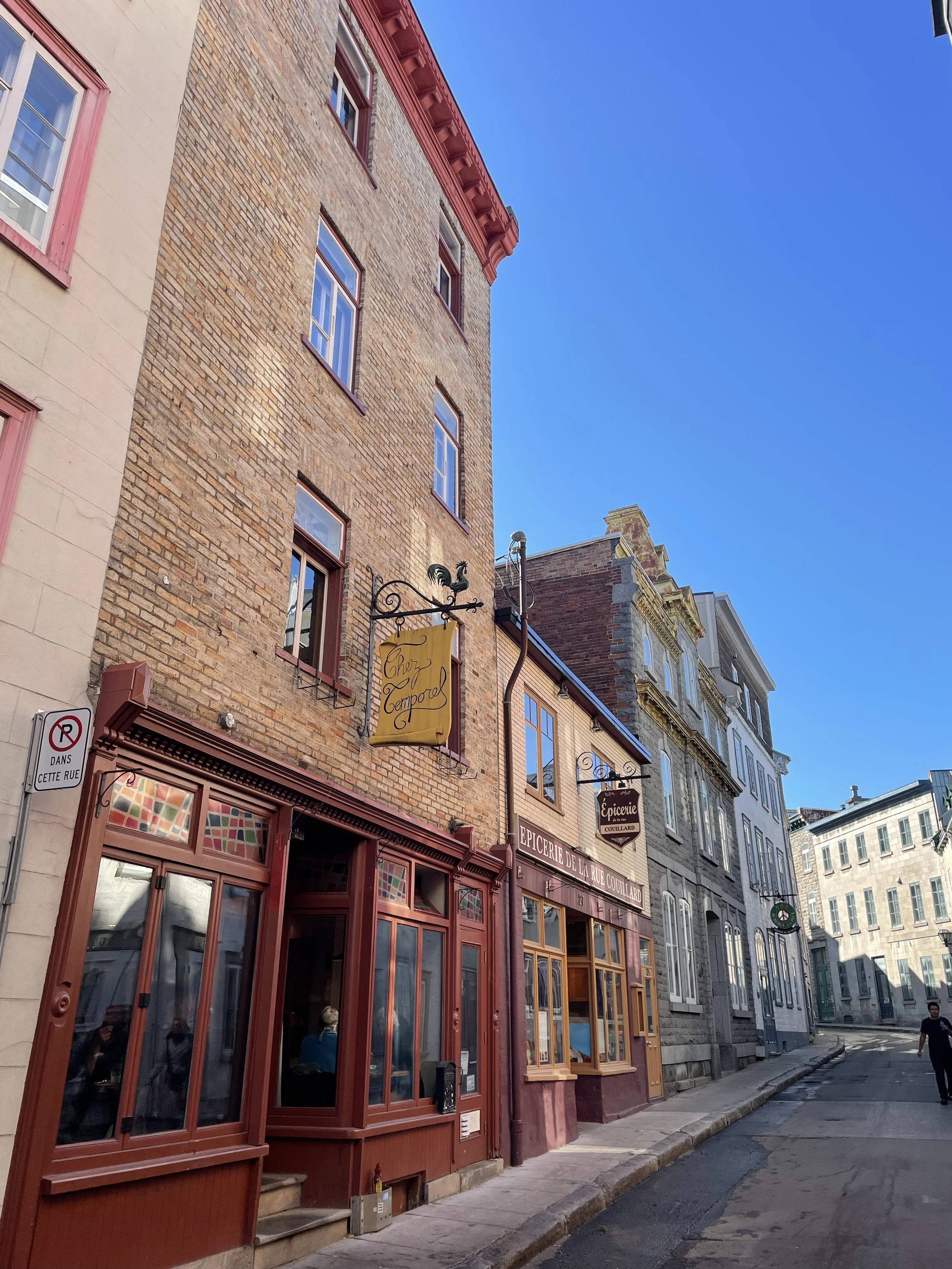
In Bury Your Dead, it's a favourite breakfast spot of Gamache and his longtime mentor, Émile Comeau, where they linger over coffee and pastries. Having always loved Penny's descriptions of food and the restaurants her characters frequent, I was especially excited to experience one of those places for myself.
I’d hoped for a pleasant lunch stop with a literary connection, but the experience exceeded my expectations.
From the moment we stepped inside, I loved the atmosphere. It had that wonderfully authentic, unpretentious Québécois character that can be difficult to find in restaurants catering primarily to tourists. The intimate dining room, warm wood, and old photographs on the walls made it feel like a place with stories of its own.
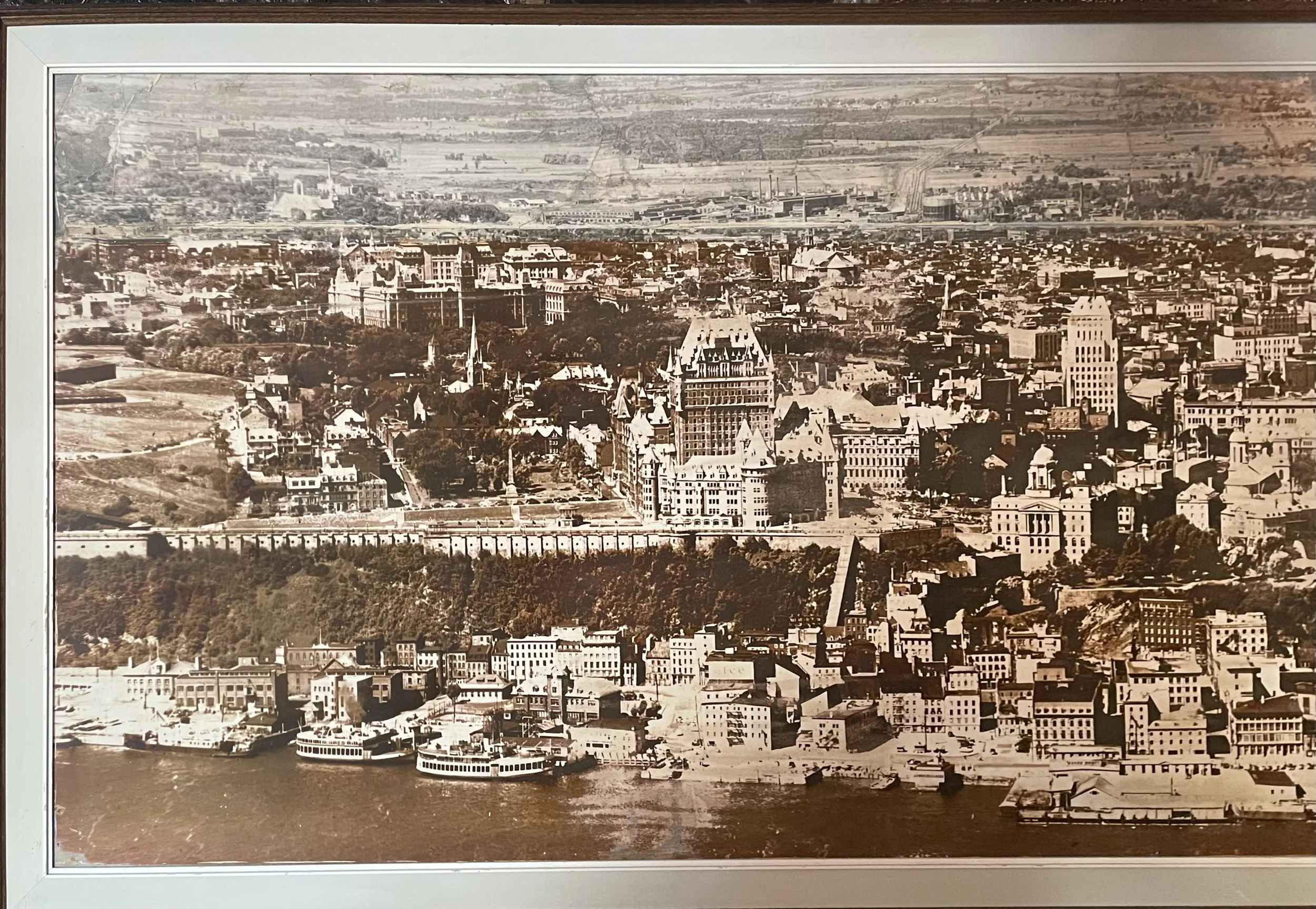
Tim was particularly taken with a large historical photograph of Old Québec hanging on the wall. He loves old photographs, so that was an unexpected little pleasure.
And then there was our waiter.
At first, we weren’t quite sure what to make of him. He had a rather serious manner, and we couldn’t tell whether he was simply reserved or perhaps a little stern. But when we asked him to take a photograph of the three of us, he turned the camera around and took a selfie instead!
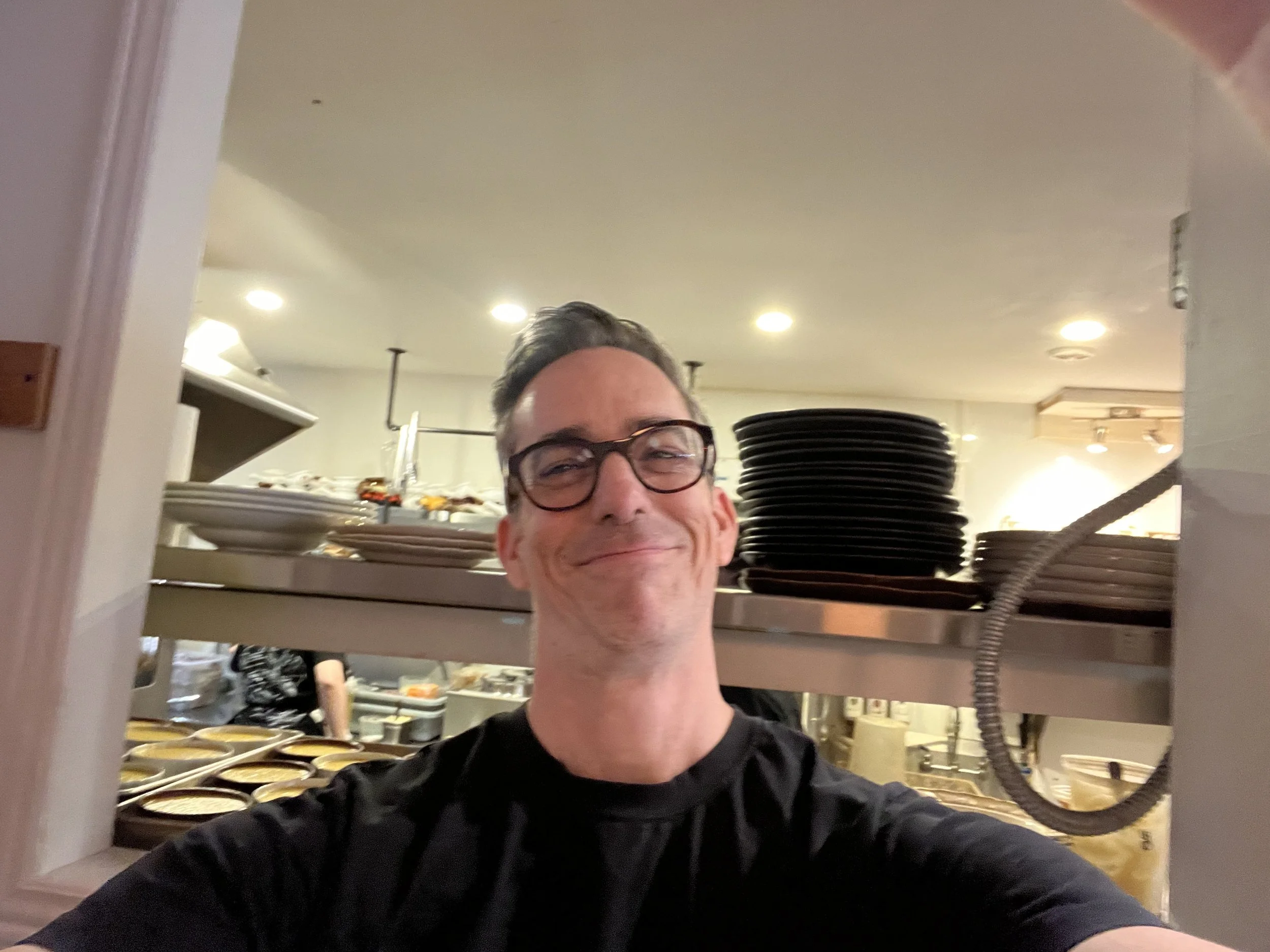
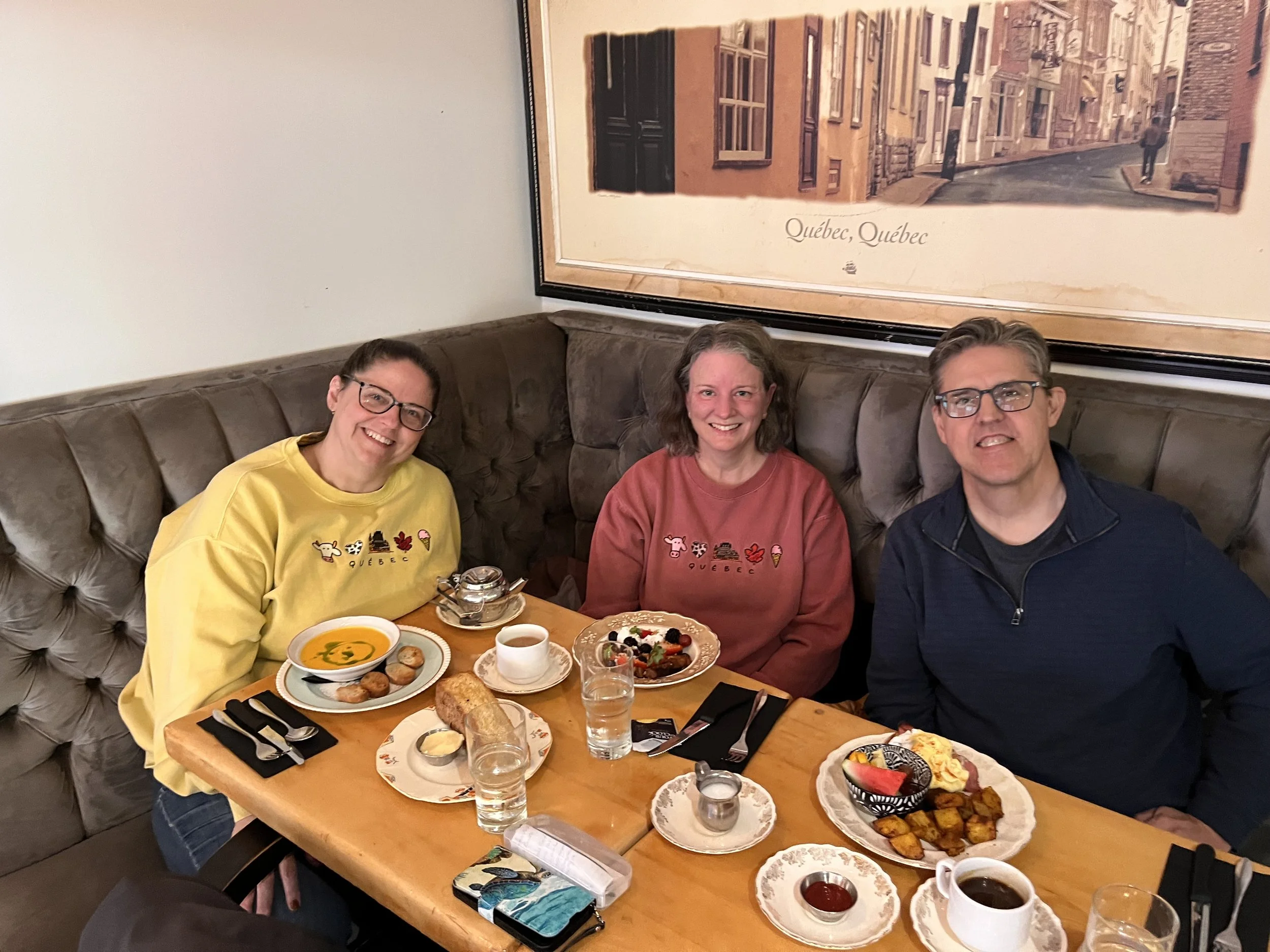
That was when we realized we’d been dealing with someone with a wonderfully dry sense of humour.
As for the food, it was absolutely delicious.
Tina wasn’t particularly hungry and ordered a simple lunch of soup and bread, but even that turned out to be outstanding. Tim chose an Eggs Benedict dish, while I ordered caramelized French toast with fresh fruit that was truly out of this world.
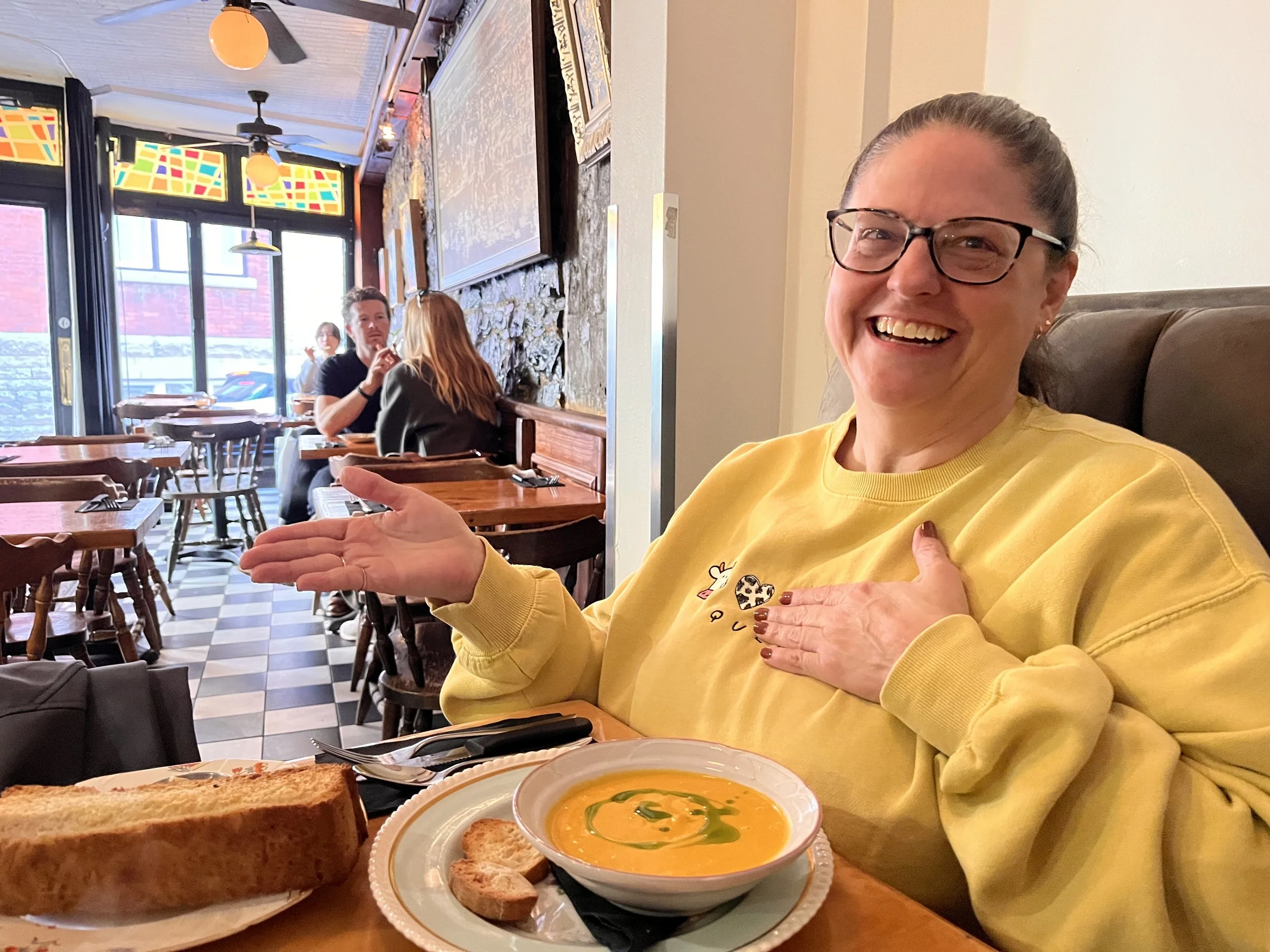
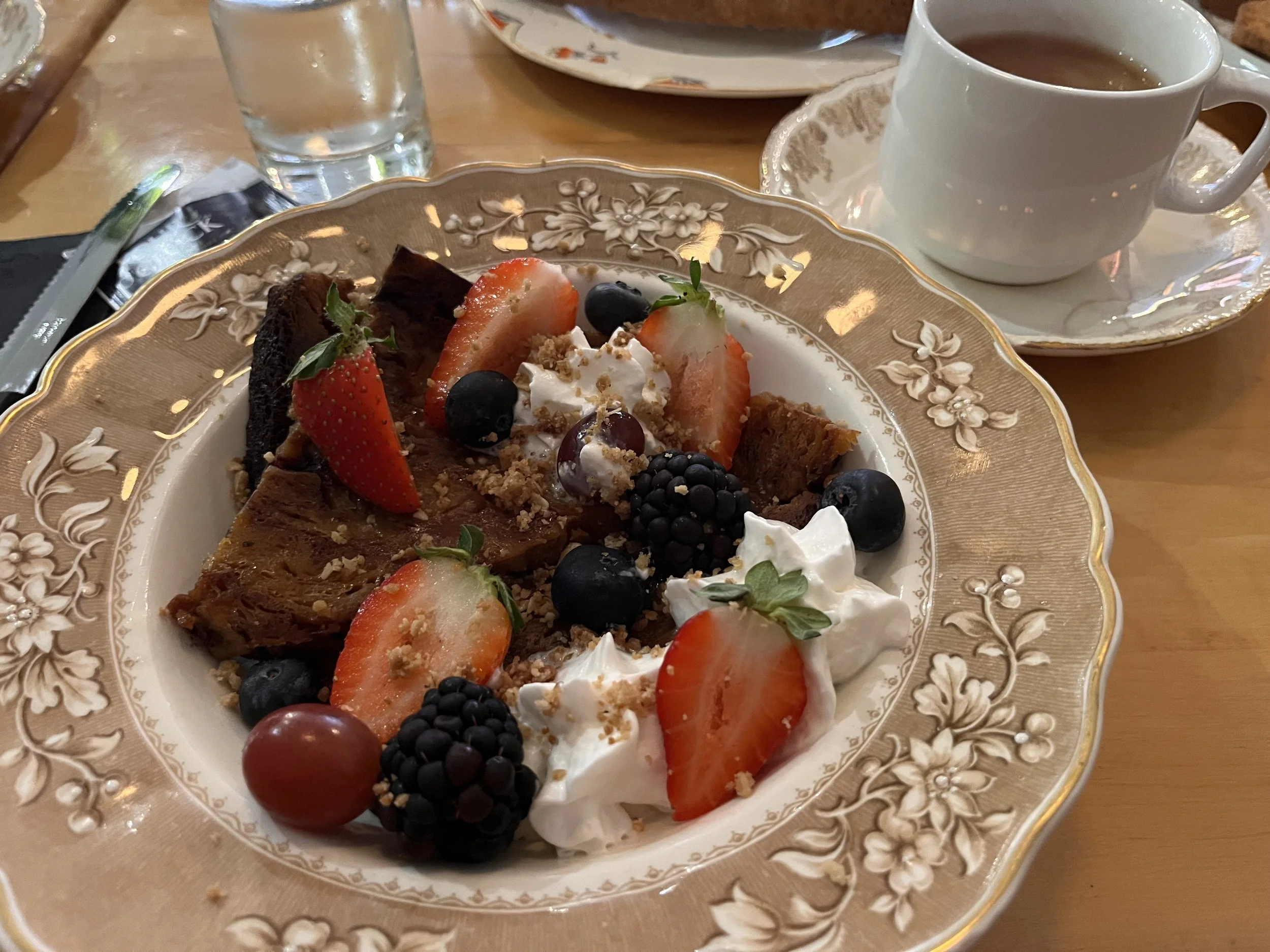
Although two of us ended up choosing brunch-style dishes, Chez Temporel also offered a full lunch menu.
Between the delicious food, the cozy atmosphere, and our entertaining waiter, it turned out to be one of our most memorable meals in Québec City. And the fact that we’d found it through Louise Penny made the experience even more fun.
A Walk Along Dufferin Terrace
After lunch, we continued exploring Old Québec on foot, eventually making our way along Dufferin Terrace beside the magnificent Château Frontenac.
We’d enjoyed this beautiful promenade on other occasions during our stay, but with its views of the St. Lawrence River and the historic buildings of the Old City, it was certainly worth another visit.
One landmark that caught our attention was the famous Dufferin Terrace Toboggan Slide, a Québec City winter tradition dating back to 1884. In Bury Your Dead, Gamache watches tobogganers hurtling down the icy track and remembers riding it with Reine-Marie when they were first falling in love. Afraid of heights, he was determined not to let his future wife know just how terrified he was!
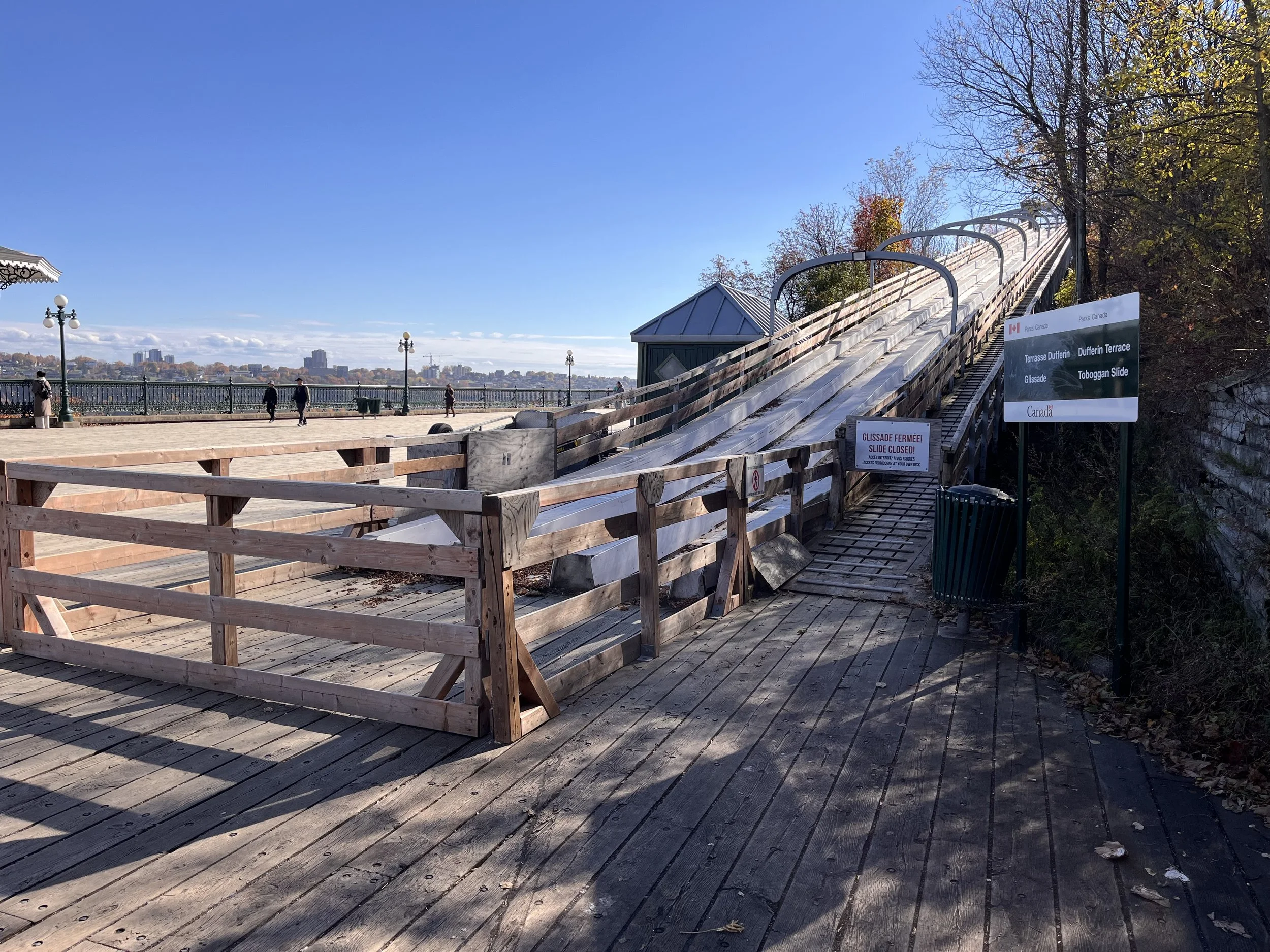
Of course, there was no tobogganing during our October visit, but it was fun to see the slide up close and imagine the scene. I’m not sure whether I'd be brave enough to try it myself on a winter visit!
Up to the Plains of Abraham
From Dufferin Terrace, we continued toward the Plains of Abraham, enjoying more of Québec City's autumn scenery along the way.
It was a beautiful afternoon for walking, with the trees showing off their fall colours and lovely views opening up over the St. Lawrence River. I couldn't help thinking of Gamache walking here with his beloved German shepherd, Henri, in Bury Your Dead. Of course, his walks took place in the depths of winter, often in the quiet, snowy hours before dawn—a very different scene from the brilliant October afternoon we were enjoying!
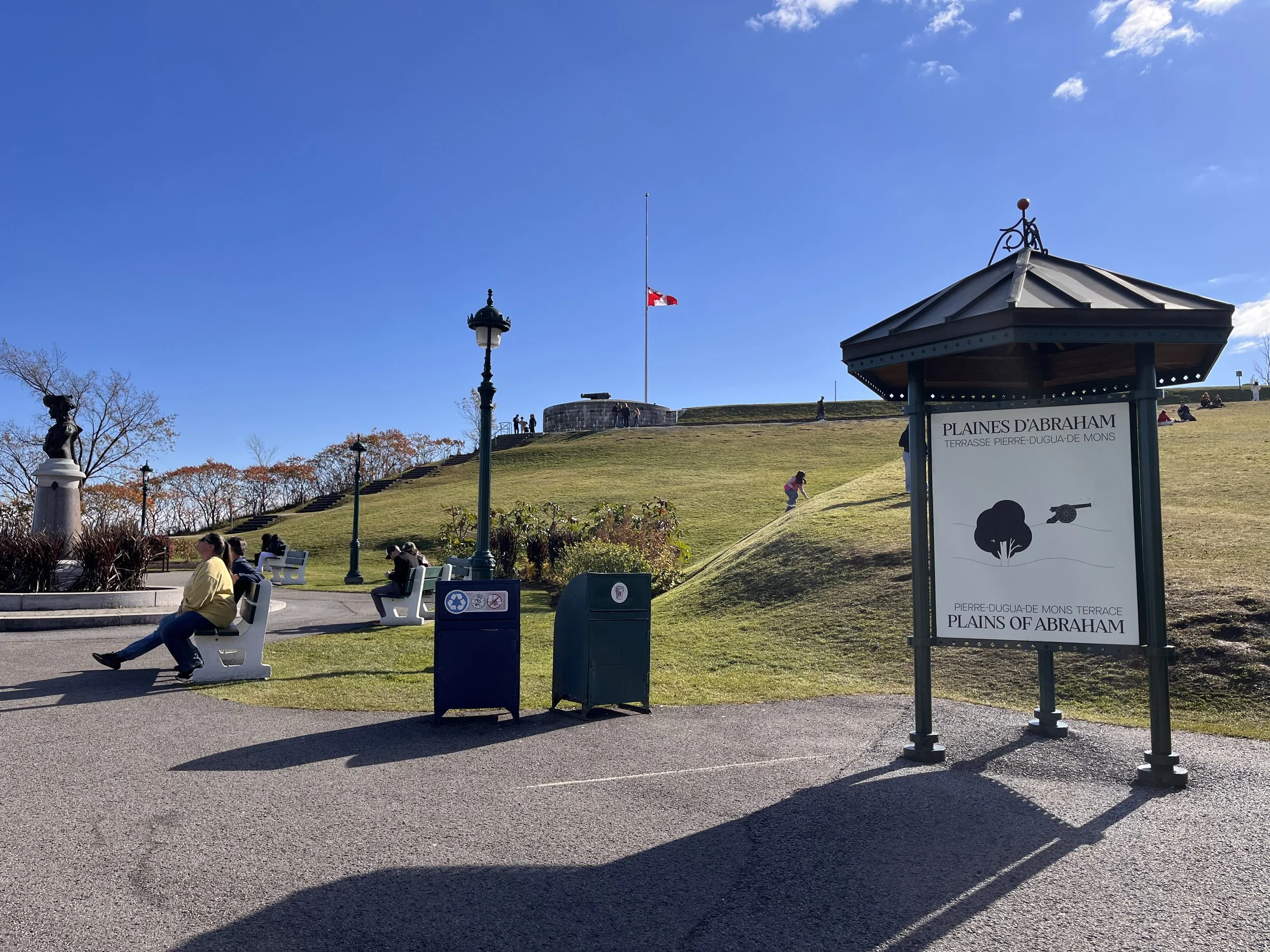
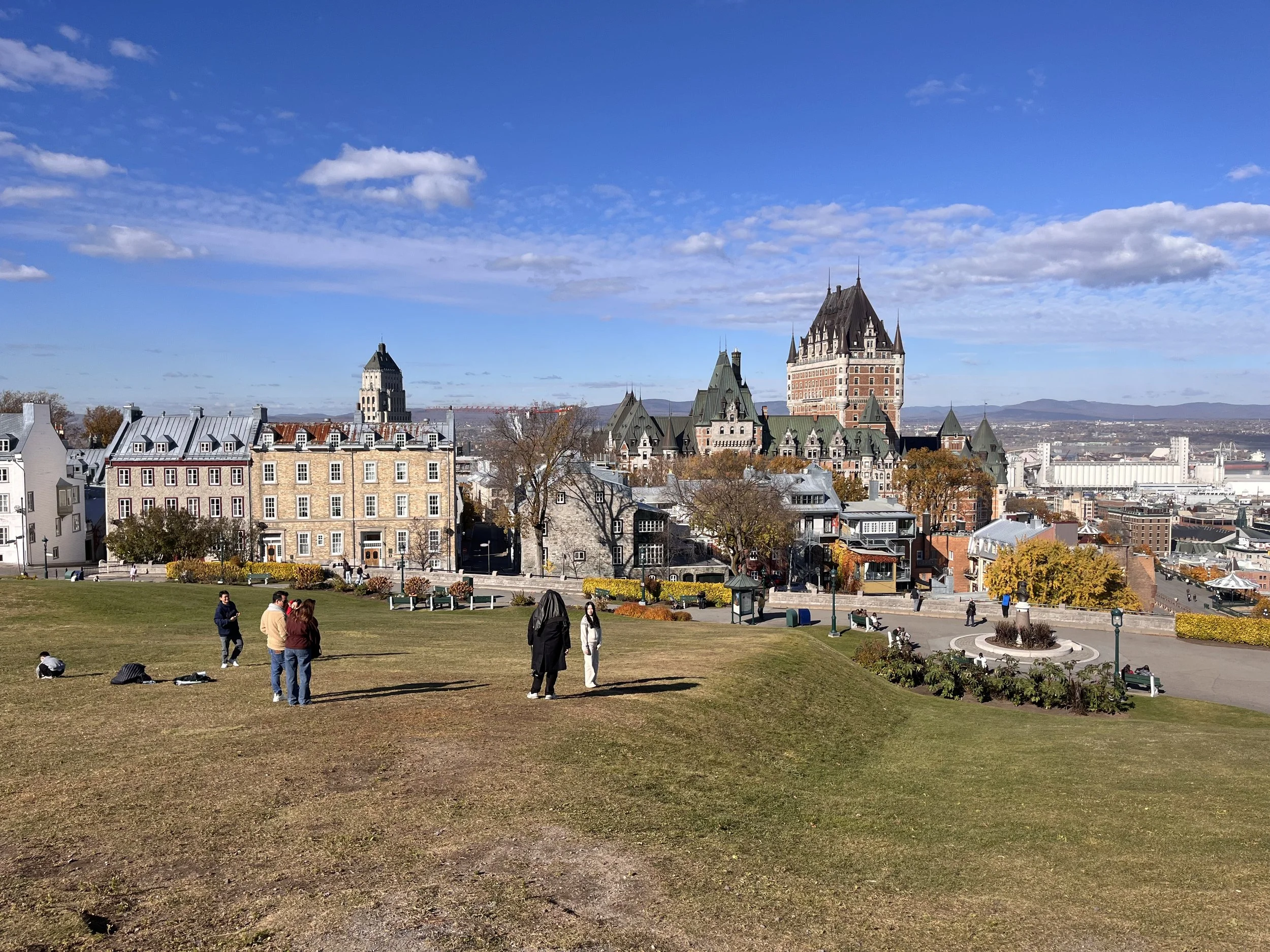
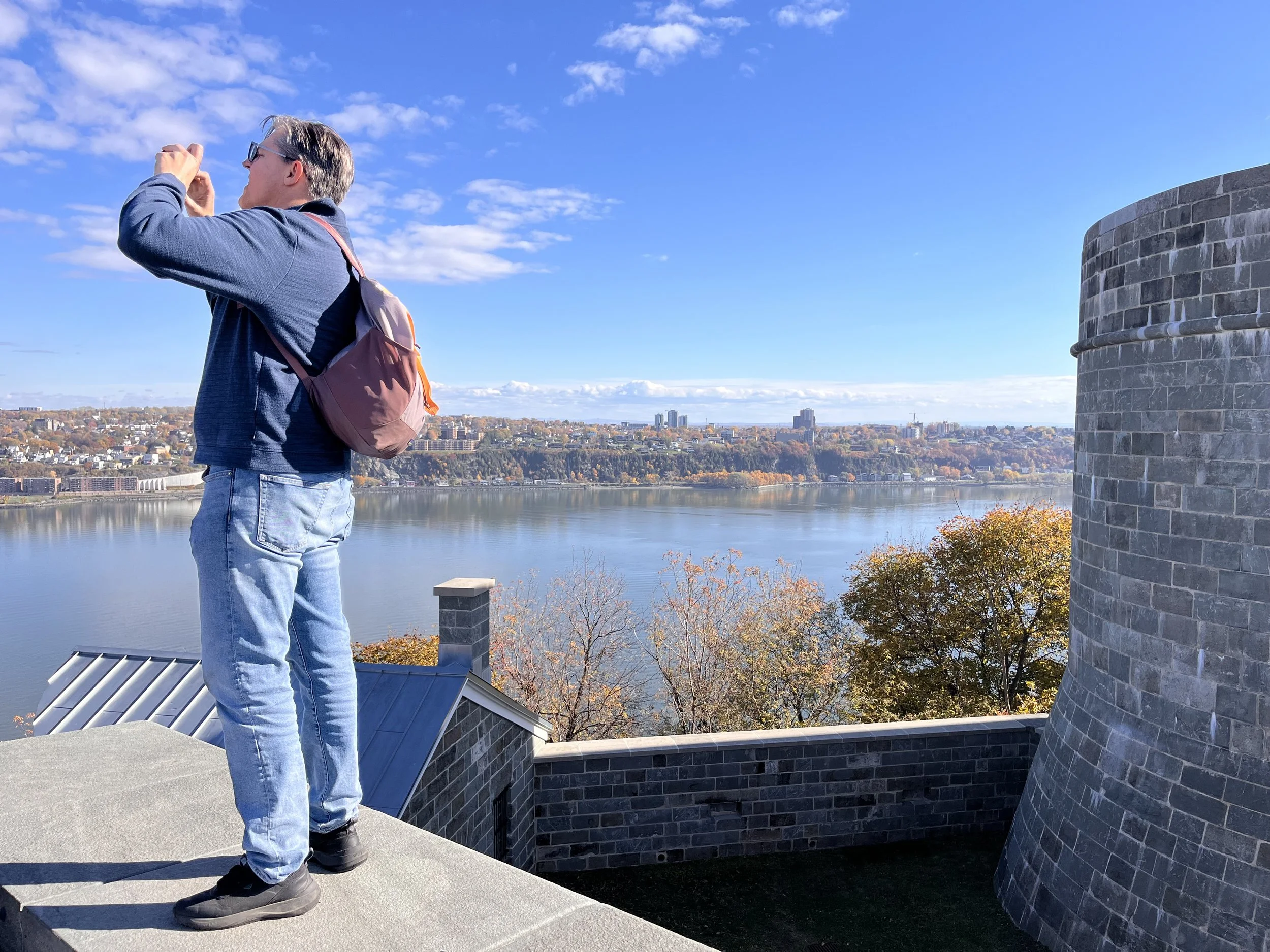
After a morning spent learning about some of the darker chapters in the city's history, it felt good to be outdoors, taking in the scenery and enjoying the atmosphere of this remarkable place.
And it seemed a fitting way to end our literary-inspired day. We'd started with places connected to a fictional mystery, but what stayed with us were the real stories, memorable characters, wonderful food, and beauty of Old Québec itself.
You certainly don't need to be a Louise Penny reader to enjoy any of these experiences. Tina was proof of that!
Things to Read
Bury Your Dead — Louise Penny
The sixth novel in the Inspector Gamache series takes readers to Québec City, where Gamache spends time among the books and history of the Literary and Historical Society of Quebec at the Morrin Centre.
It’s a particularly enjoyable book to read before visiting the city, especially if you appreciate mysteries that incorporate history and a strong sense of place.
If you’re new to Louise Penny’s novels, I’d recommend starting with the first book, Still Life, and reading the series in order. The characters’ stories develop across the novels, and there’s much to appreciate in following their journeys.
Practical Details
Morrin Centre
Located at 44 Chaussée des Écossais in Old Québec, the Morrin Centre offers guided historical tours exploring its former jail, college, and library. I’d strongly recommend booking ahead, particularly if you want an English-language tour.
The regular historical tour is worthwhile whether or not you’ve read Louise Penny. Victorian-inspired teatime experiences are also offered on selected dates.
Website: https://www.morrin.org/en/guided-tours/
Chez Temporel
A charming bistro in Old Québec, serving brunch and lunch options in a wonderfully cozy setting. It was one of our favourite restaurant discoveries of the trip. We had no trouble getting a table without a reservation, but we'd deliberately arrived before the lunch rush. By the time we were eating, the tables were filling up.
Website: https://cheztemporel.com/
Dufferin Terrace Toboggan Slide
The historic toboggan slide operates seasonally during the winter, weather permitting. Even when it’s closed, you can see its distinctive wooden structure along Dufferin Terrace, near Château Frontenac.
Website: https://au1884.ca/
Plains of Abraham
This expansive historic park offers scenic walking opportunities, beautiful views, and plenty of space to explore. It’s an enjoyable addition to a day spent wandering through Old Québec.
Website: https://www.plainsofabraham.ca/
