SUMMIT One Vanderbilt: A Dizzying, Dazzling Experience
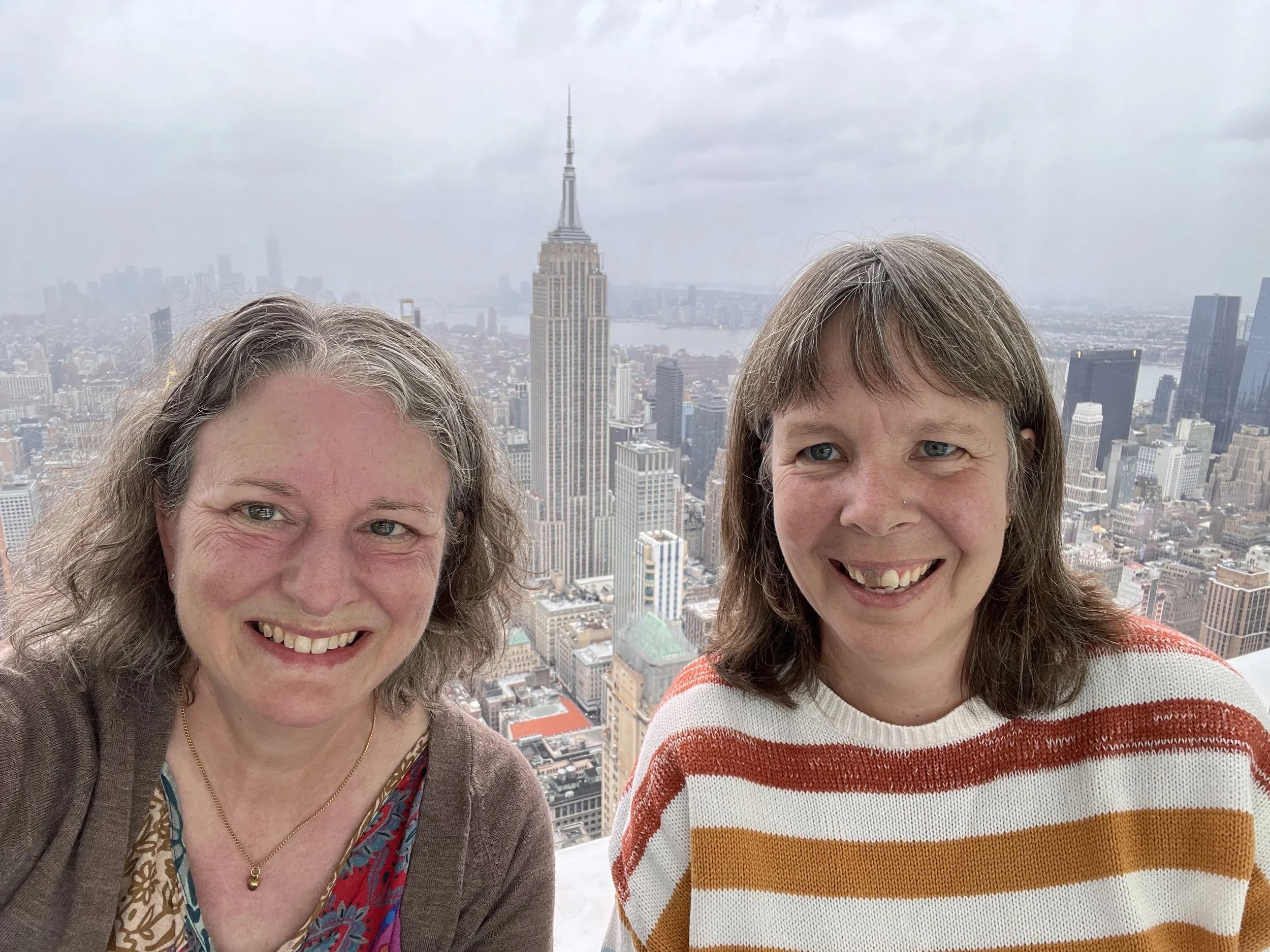
Natasha and me at SUMMIT One Vanderbilt, with the Empire State Building framed behind us.
My friend Natasha and I had already planned two very full days in New York City when I came across SUMMIT One Vanderbilt. We'd both been to observation decks in New York before, so another panoramic city view wasn't necessarily something we needed to squeeze into a packed itinerary. But SUMMIT seemed different. Part observation deck and part immersive art experience—that sounded intriguing!
We both love taking photos—especially when we can play around a little with composition and perspective—and the mirrored spaces at SUMMIT looked as though they had been designed for exactly that kind of experimenting.
Then we discovered another connection. One of the installations at SUMMIT was by Japanese artist Yayoi Kusama, an artist Natasha already knew. She had previously tried, unsuccessfully, to get tickets to see one of Kusama's exhibits in Toronto. Suddenly our last-minute addition felt particularly serendipitous.
And, conveniently, it hardly required a detour. One Vanderbilt is directly beside Grand Central Terminal, where we would be arriving by train from White Plains on both of our days in Manhattan. Somehow we found a spot for SUMMIT in our itinerary, and I’m very glad we did.
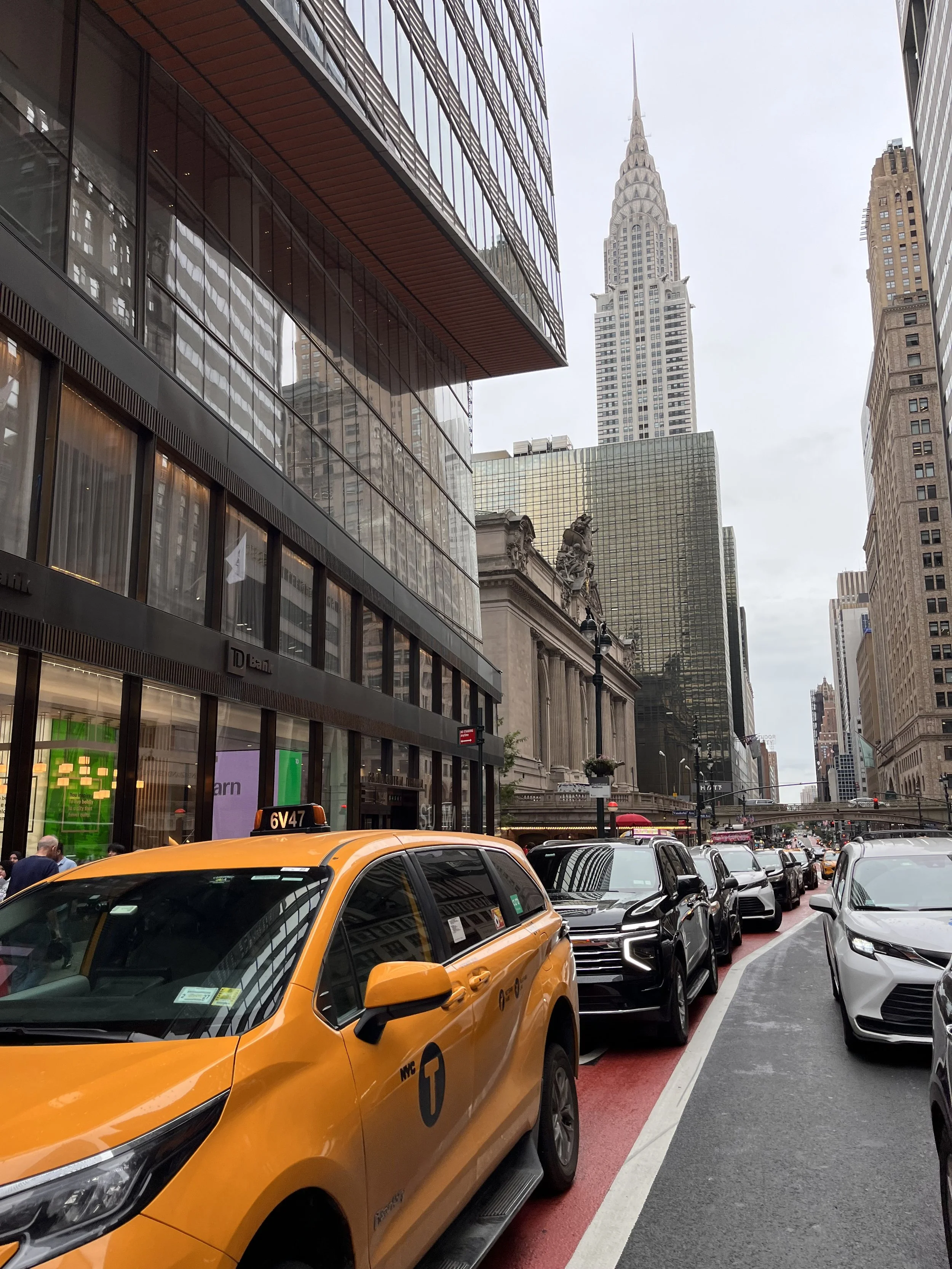
Grand Central Terminal beside One Vanderbilt, with the Chrysler Building rising behind them.
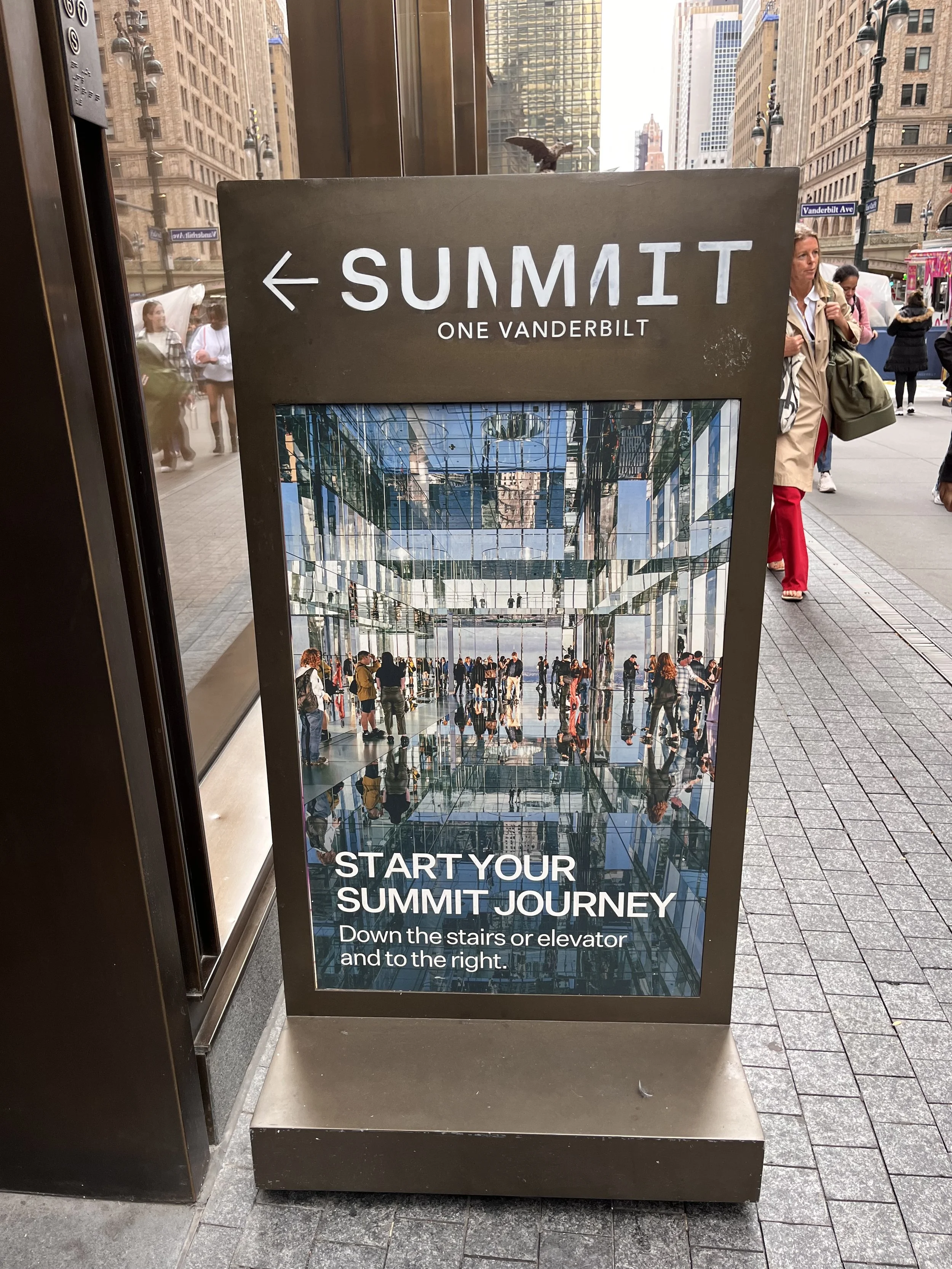
Entrance sign directing visitors to the immersive observation experience.
Our visit began with security and a digital photo opportunity, which we declined. Next we were given shoe covers to protect the highly reflective floors upstairs. A practical tip: be sure to wear pants or shorts for the experience—not a skirt or a dress.
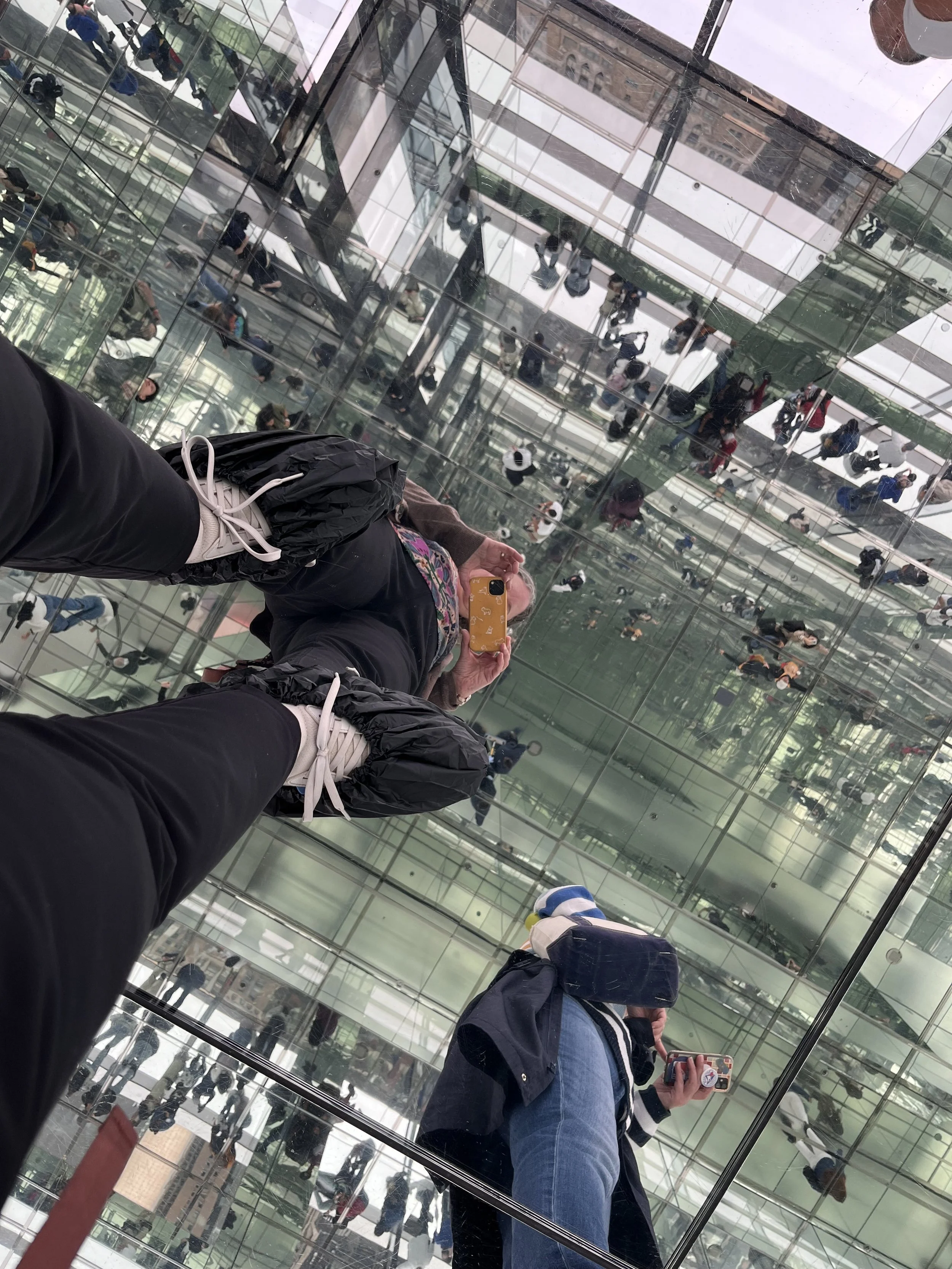
Visitors must wear protective shoe covers on the SUMMIT One Vanderbilt’s mirrored floors.
We then watched a very short film about One Vanderbilt before boarding the elevator to the 91st floor.
This introductory part of the experience was probably my least favourite. The film felt more like promotional material than an introduction to the building, and I would happily have traded some of the futuristic marketing for a few interesting facts about One Vanderbilt—how and when it was built, its height, and information about the businesses it houses in addition to the SUMMIT experience.
The elevator ride itself was certainly fast. It was also accompanied by dramatic sound and light effects that struck me as a little more gimmicky than exciting.
Fortunately, that's pretty much where my complaints end.
Feeling slightly wobbly and giddy after the rapid ascent, we walked down a short, brightly lit hallway and into AIR, the immersive installation created by Kenzo Digital.
And suddenly, everything opened up.
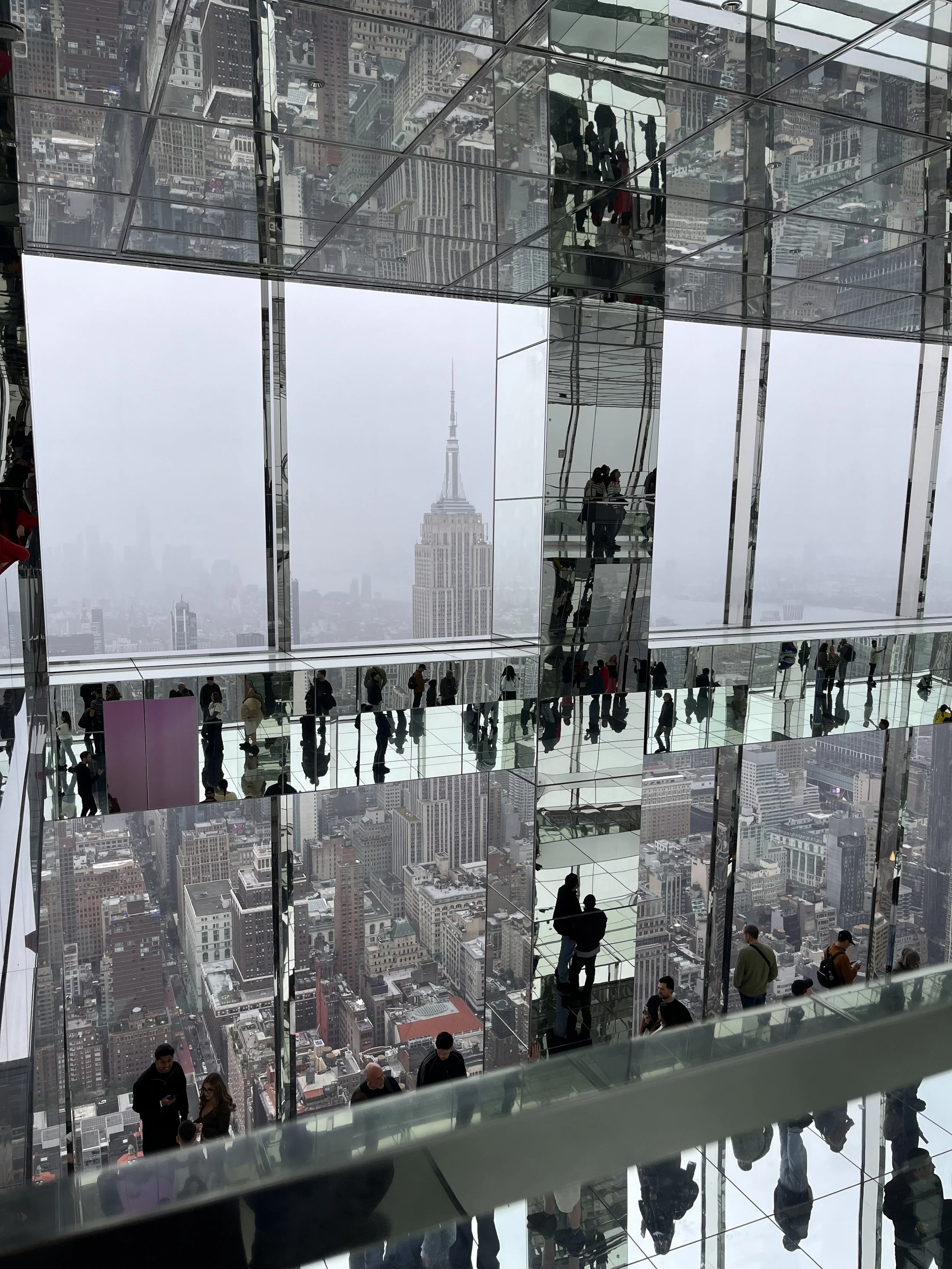
Mirrored interior of SUMMIT One Vanderbilt reflecting visitors, the skyline, and the Empire State Building.
The first major space, Transcendence 1, is a soaring room of mirrors, windows and skyline. Floors, walls and ceilings reflect both the city and everyone moving through the space, creating the illusion that Manhattan stretches endlessly in every direction. It was magical.
We stood there wide-eyed at first, turning every which way to take in the views and the reflections.
And then, of course, we pulled out our phones.
We had read beforehand that SUMMIT could be less impressive on a cloudy day, but both of us ended up being grateful for the overcast sky. I am quite sensitive to bright, bouncing light and sudden changes from dark to light, so I had worried that all those reflective surfaces might trigger a visual migraine. SUMMIT itself recommends bringing sunglasses because of the brightness of the mirrored spaces, and I had mine ready. In the end, I never needed them.
The softer light turned out to be perfect for us.
The views of the Empire State Building were particularly impressive, but almost as much fun as looking outward was looking at what the mirrors were doing inside the room. We sat on the floor overlooking the skyline, took photos of each other, attempted selfies and occasionally handed a phone to another visitor, who was invariably happy to take a photo of the two of us.
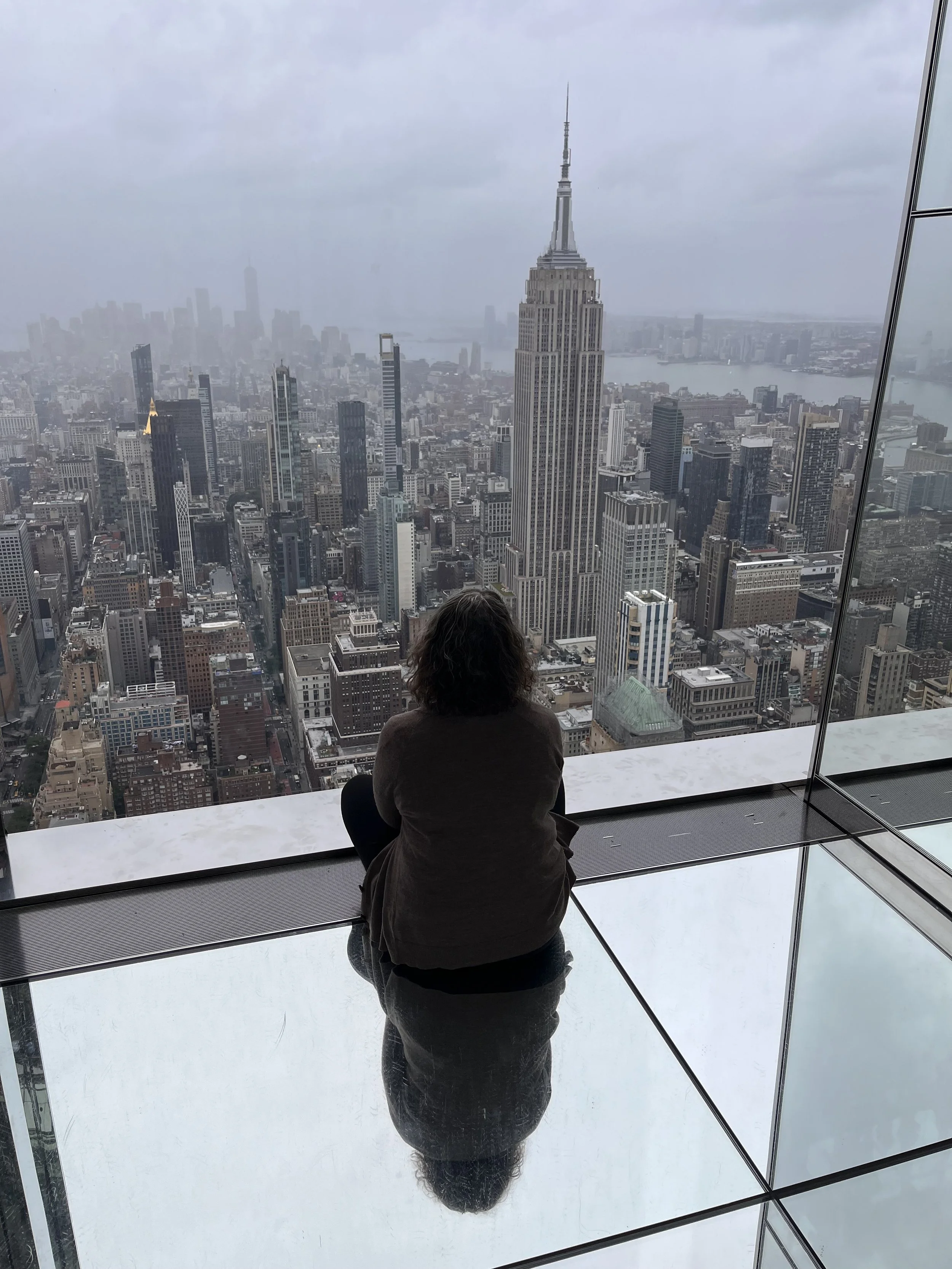
Seated on the mirrored floor with a view of Manhattan and the Empire State Building.
The mirrors created an effect of endlessness that was simultaneously disorienting and uplifting. You could see the city, yourself, other visitors and then repetitions of all three stretching seemingly forever.
From there we moved into Reflect, featuring Yayoi Kusama's silver, cloud-like sculptures. It was a lovely space, and knowing that Natasha had previously tried to see Kusama's work in Toronto made it especially fun to encounter it here almost by accident. For me, though, it was quieter and less compelling than the enormous mirrored expanse we'd just left.
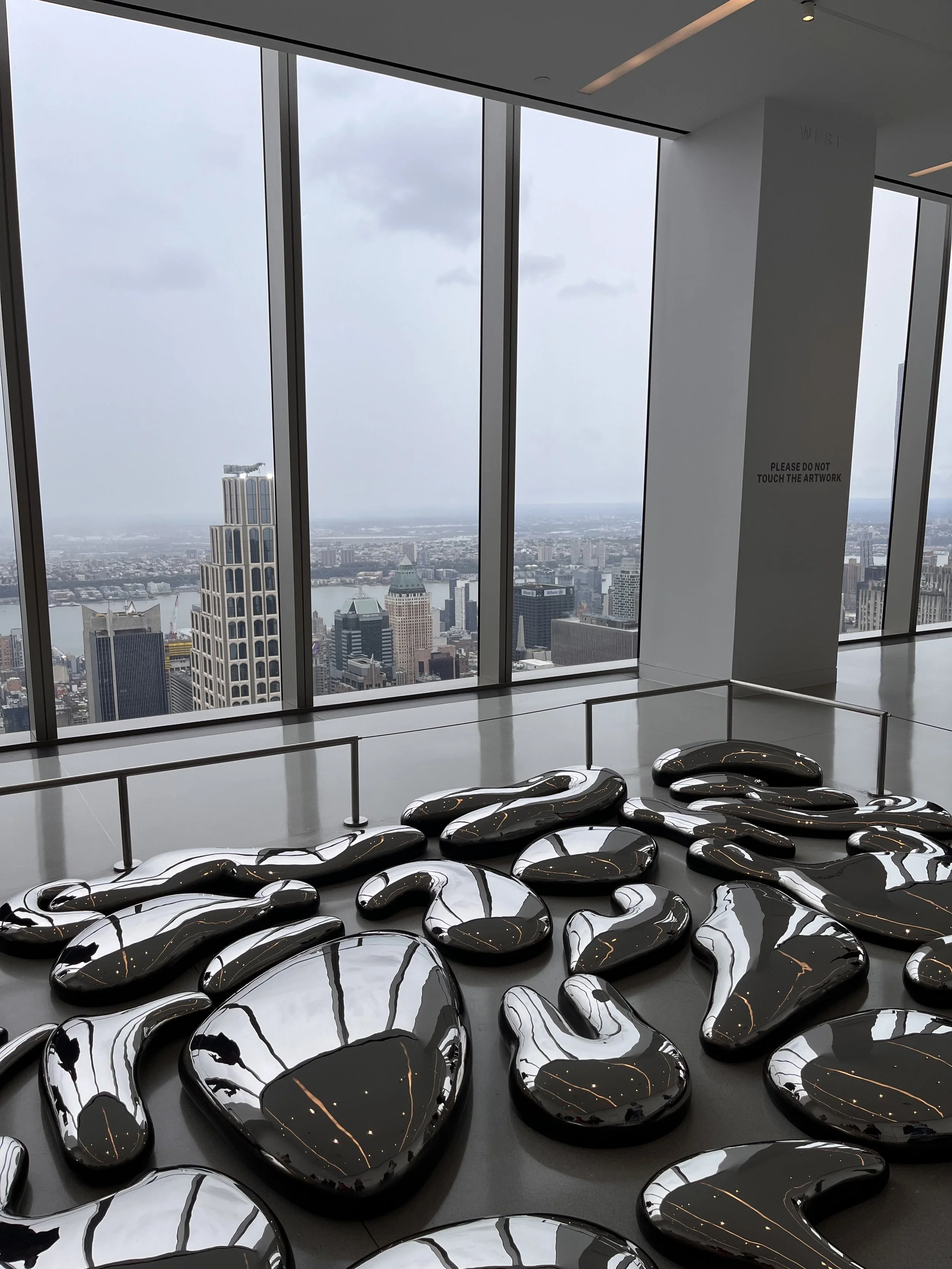
Yayoi Kusama’s polished, reflective forms in Reflect with the East River visible beyond.
A favourite part of the experience came when we entered Affinity.
This room is filled with large, reflective silver balloons kept gently in motion by currents of air. More silver forms hang overhead, creating the feeling of walking into some strange, shimmering balloon cave—with Manhattan visible beyond it all.
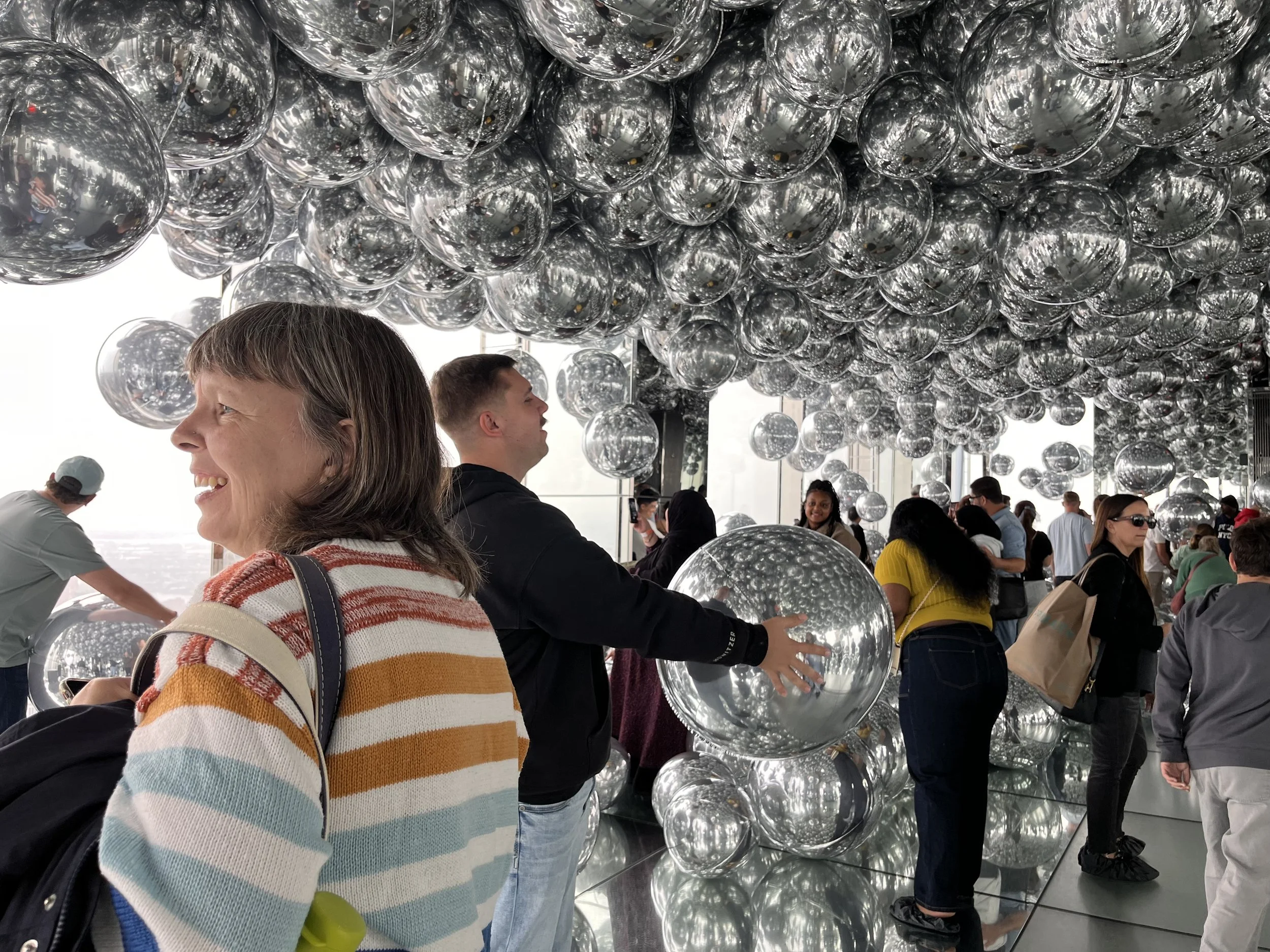
Natasha entering Affinity, the balloon installation room.
It was also impossible not to play.
Natasha and I immediately reverted to childhood, batting the balloons into the air and trying to keep them moving while the skyline appeared and disappeared behind them.
Affinity felt noticeably more crowded than the earlier spaces. Between the people, the balloons and everyone trying to take photographs, there was a lot going on. Staff members periodically moved through the room reminding visitors to keep their stay to about ten minutes so others could have a turn.
We had taken photos of each other, but before leaving we wanted a few of the two of us together. As one of the employees passed by calling out the time limit, I asked whether she might take one.
She immediately smiled, took my phone and pointed us toward the windows.
Natasha and I started batting balloons back and forth, not really posing at all, and she just kept taking pictures. Then, without our even asking, she switched to video and captured us laughing and playing among the floating silver balloons with New York spread out behind us.
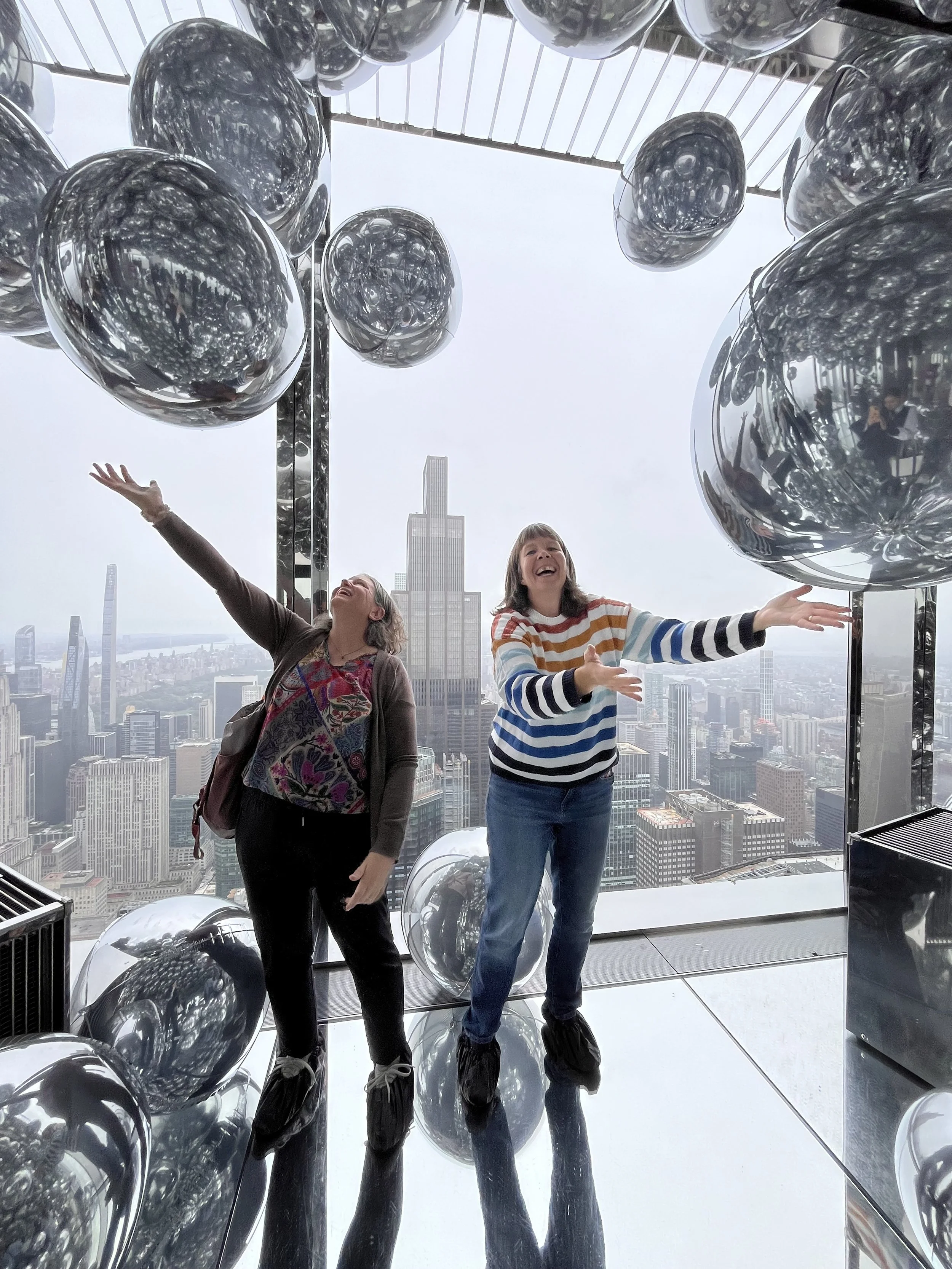
Laughing and playing high above Manhattan.
It ended up being one of my favourite souvenirs of the entire trip.
There was one SUMMIT feature we were perfectly content to skip. Levitation consists of glass-bottomed boxes projecting out over Madison Avenue from the 92nd floor, more than 1,000 feet above the street. Neither Natasha nor I felt any particular urge to stand on a glass floor at that height.
Skipping it also worked in our favour. The line for the boxes looked as though it would have been the most time-consuming part of our visit, and we had a fairly tight schedule that day. Because it wasn't important to either of us, we were able to spend our time enjoying the parts of SUMMIT we'd actually come to see.
And we never felt rushed.
If I could do one thing differently, I might spend a little less time taking photographs and a little more time simply moving around the mirrored rooms, looking outward and identifying landmarks from different sides of the building. Then again, as our visit continued, the clouds were steadily moving in and beginning to obscure some of the view.
So perhaps our timing was just right.
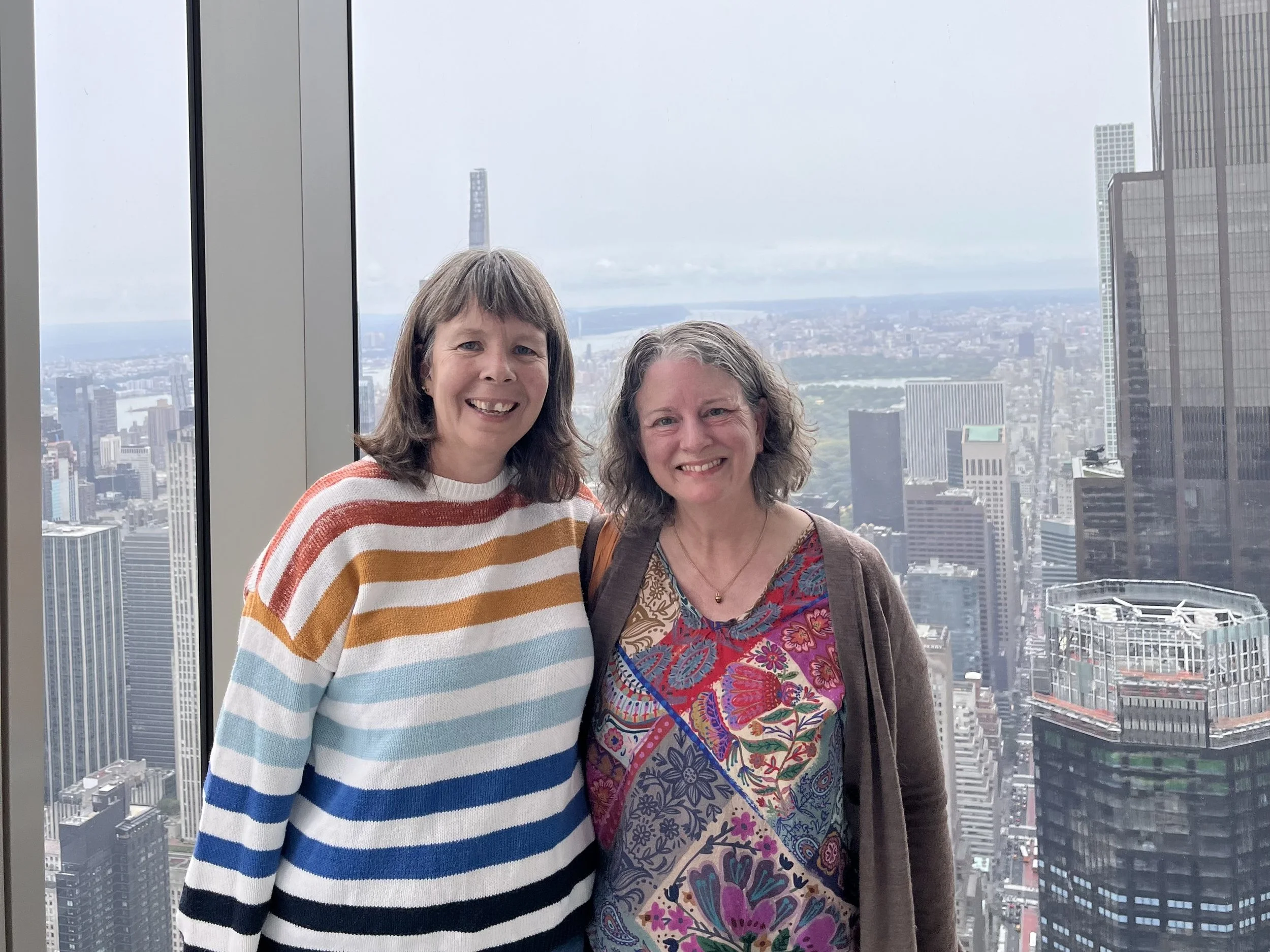
Posing in front of floor to ceiling windows with Central Park stretching out behind us.
What began as a last-minute addition to an already overcrowded New York itinerary ended up being one of its highlights. We'd gone expecting another observation deck with an artistic twist. Instead, SUMMIT gave us something much more playful: extraordinary views, art we could move through rather than simply look at, endless opportunities to create photographs of our own—and, for a little while, permission to behave like kids in a room full of balloons.
All in all, it worked out perfectly.
