My Two Best Travel Teachers
The lessons my parents taught me about seeing the world—and living in it.
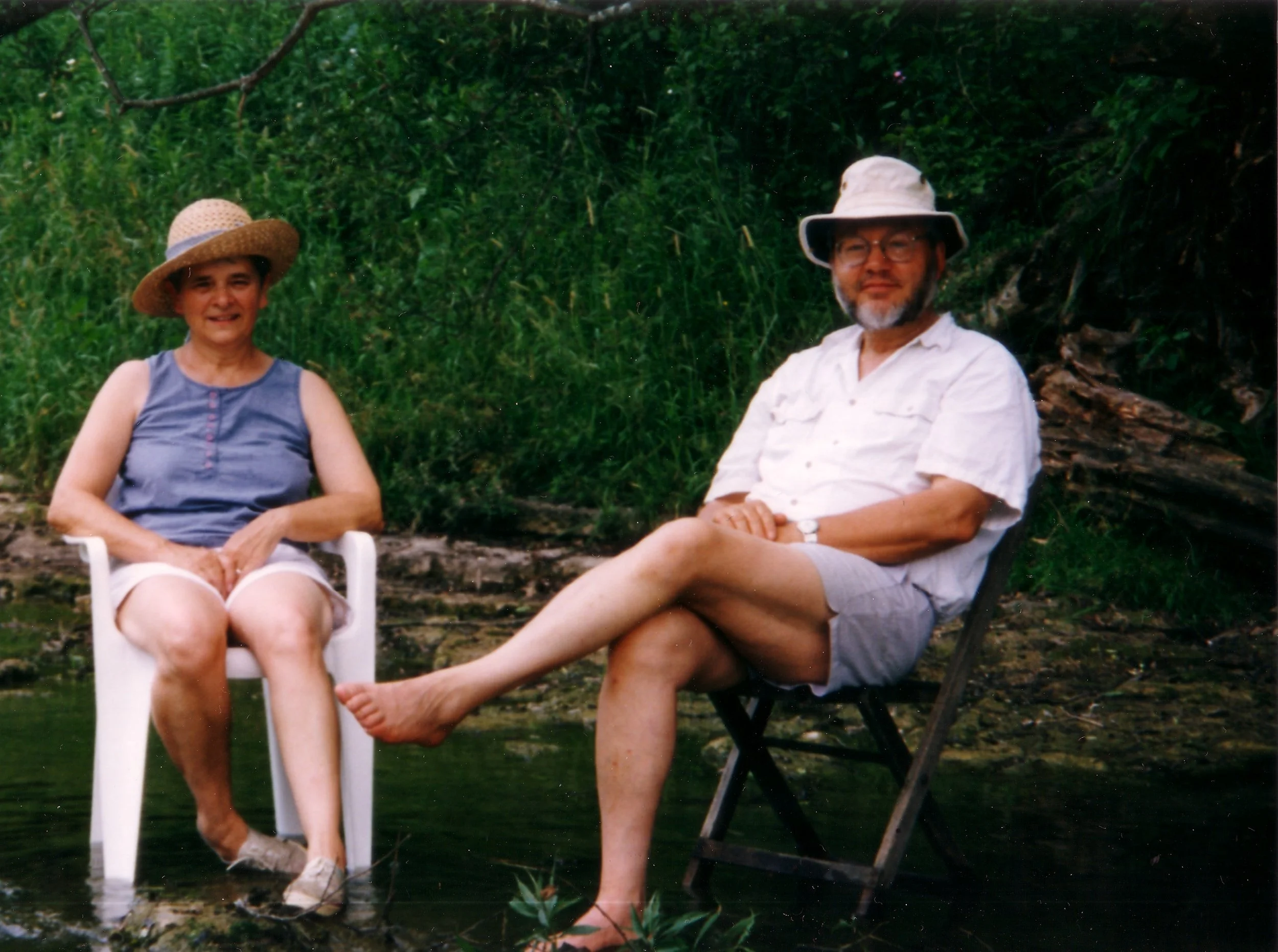
On hot summer days, my parents would carry their lawn chairs to the river near their Ontario home and spend the afternoon relaxing in the cool water.
Long before I started writing Places and Pauses, I was learning how to travel from my parents.
My father was a music professor. My mother taught writing and literature at both the high school and university levels. They believed deeply in the value of education and understood that some lessons are best learned outside a classroom. Through university courses and overseas tours they introduced generations of students and adult travellers to European music, art, literature, history, and culture.
They were also my two most important teachers.
My father approached travel with almost boundless curiosity. Every church, concert hall, painting, monument, and historic street seemed to hold another story he wanted to share. He prepared carefully, taught enthusiastically, and returned countless times to familiar places without losing his sense of wonder.
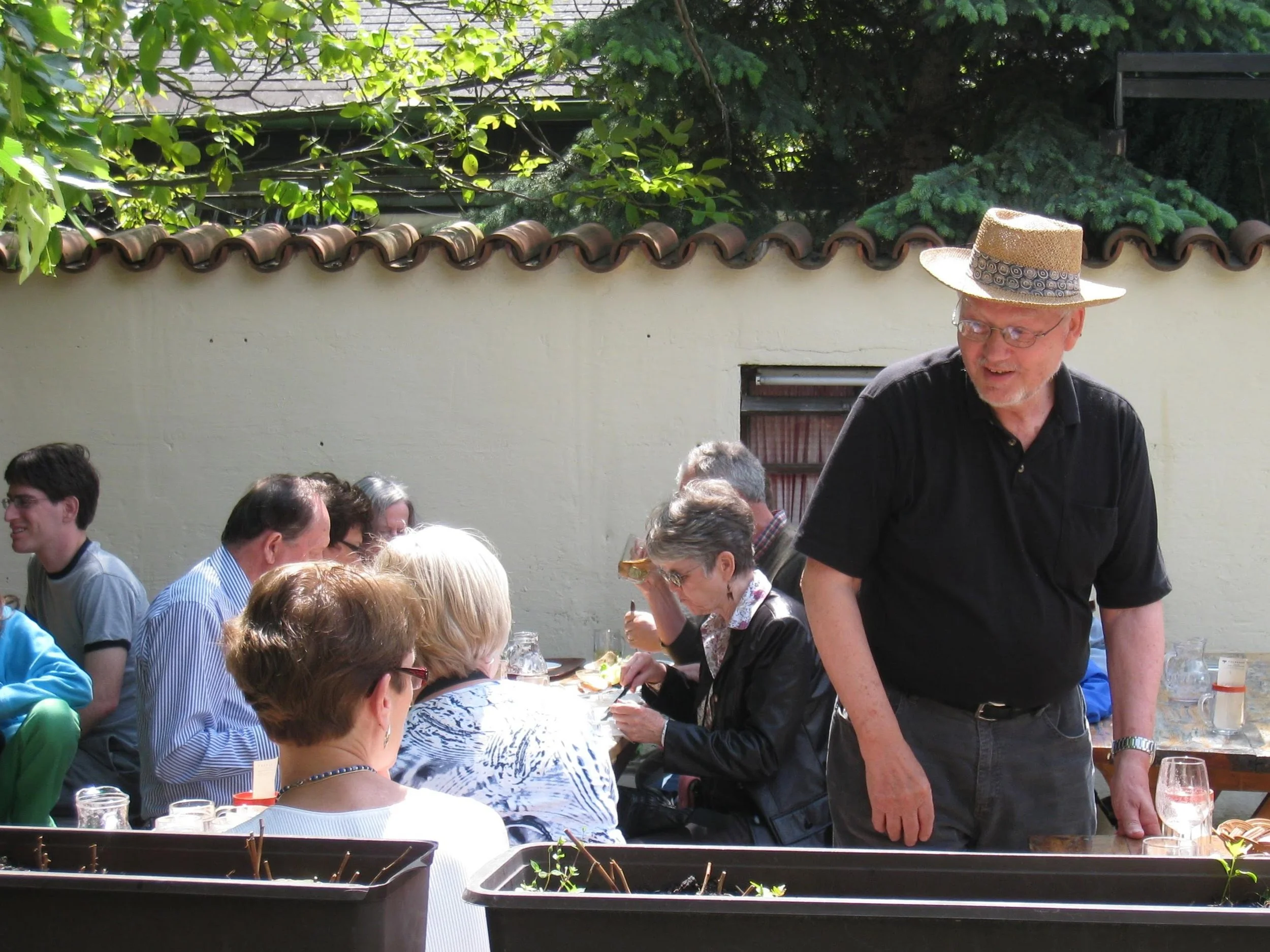
Dad talks with tour group members at a Heuriger in the Vienna Woods. He loved introducing people to the traditional food and drink of a culture—not just its music and art.
My mother brought a different kind of attentiveness. She loved literature, history, and ideas, and she helped people see the human stories within the places they visited. A Viennese café was not simply somewhere to order coffee and cake. It was part of a cultural world shaped by writers, artists, intellectuals, and conversation. Ancient ruins were not merely stones. They became places where the words of people who had once lived there could be heard again.
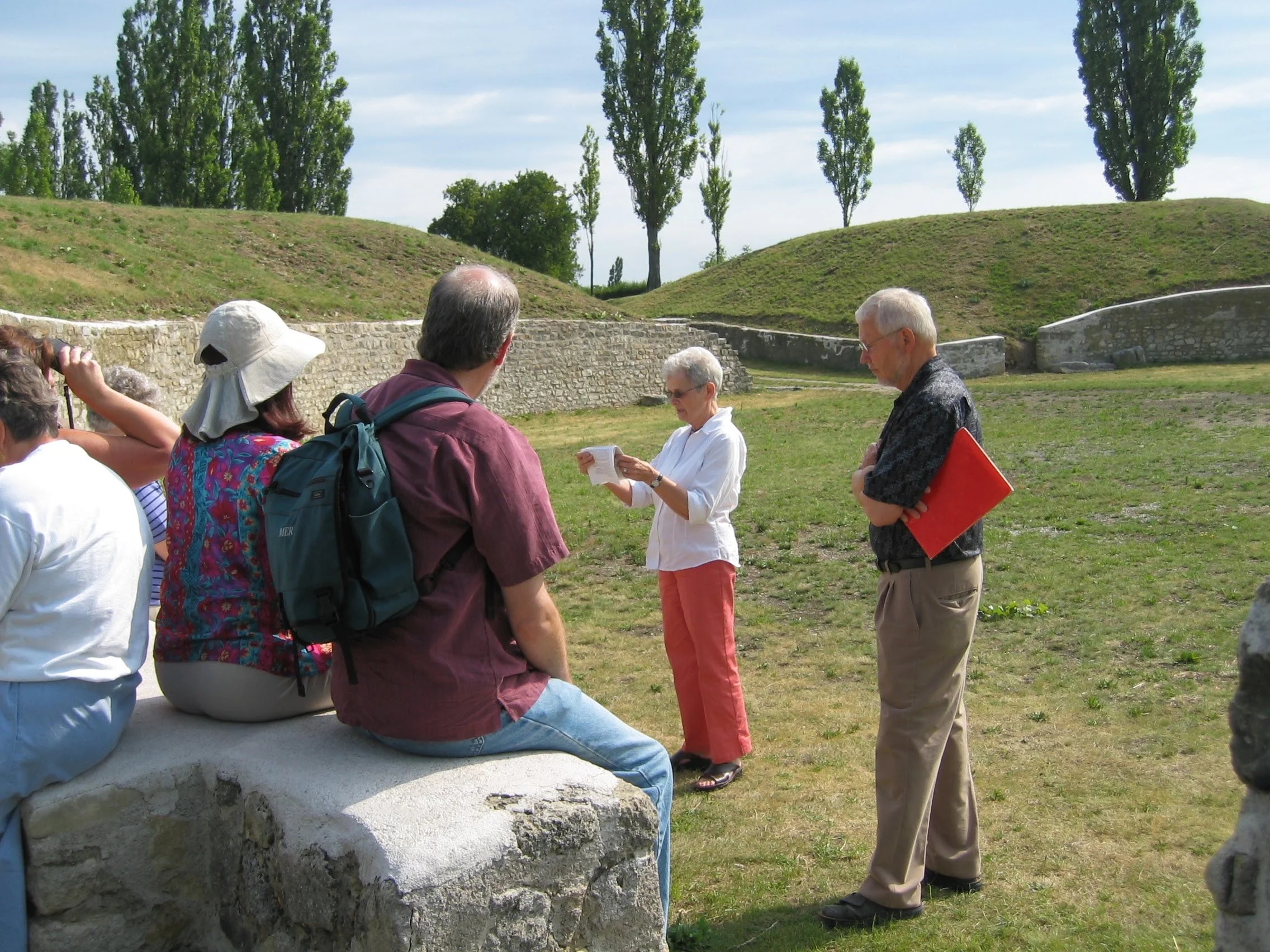
Mom reading the timeless words of Marcus Aurelius, the Roman emperor who wrote part of Meditations while encamped at Carnuntum, Austria.
My parents shared a conviction that travel should be meaningful. But they sometimes differed in their understanding of how travellers absorb that meaning.
My father believed there was always one more thing worth seeing.
Even when he tried to build free time into his study tours, he found it almost impossible not to offer an additional possibility.
“Today you have a free afternoon” he might announce.
Then, after a pause, he would add something like, “But, anyone who is interested could join me…”
What followed might be another museum, a concert, a church, or an excursion that sounded far too interesting to miss. Before long, most of the group had volunteered to spend their free afternoon with him.
My mother understood his enthusiasm, but she also recognized that people needed time to rest, wander, sit in a café, or return to something that had caught their attention earlier. She knew that an experience could be diminished if there was no space to think about it afterward.
I suspect that the philosophy behind Places and Pauses grew somewhere within that tension.
There are places worth seeking out, stories worth learning, and days worth planning thoughtfully. But there must also be room for discoveries that cannot be scheduled: a conversation, a quiet bench, a neighbourhood walk, or an hour in a cafe watching daily life unfold.
I did not consciously decide to adopt my parents’ way of travelling. It became part of me gradually.
For many summers, I worked as one of my father’s travel assistants in Vienna, Austria. My older brother, Chris, also assisted him at various times, as did my husband, Tim. I happened to travel most frequently because my father began needing more help during the years when my own schedule allowed it. I was in graduate school and then teaching college writing classes, which left late spring and early summer relatively free. Dad always offered his Vienna tours during the Spring Music Festival in Vienna, so that timing worked out perfectly for me.
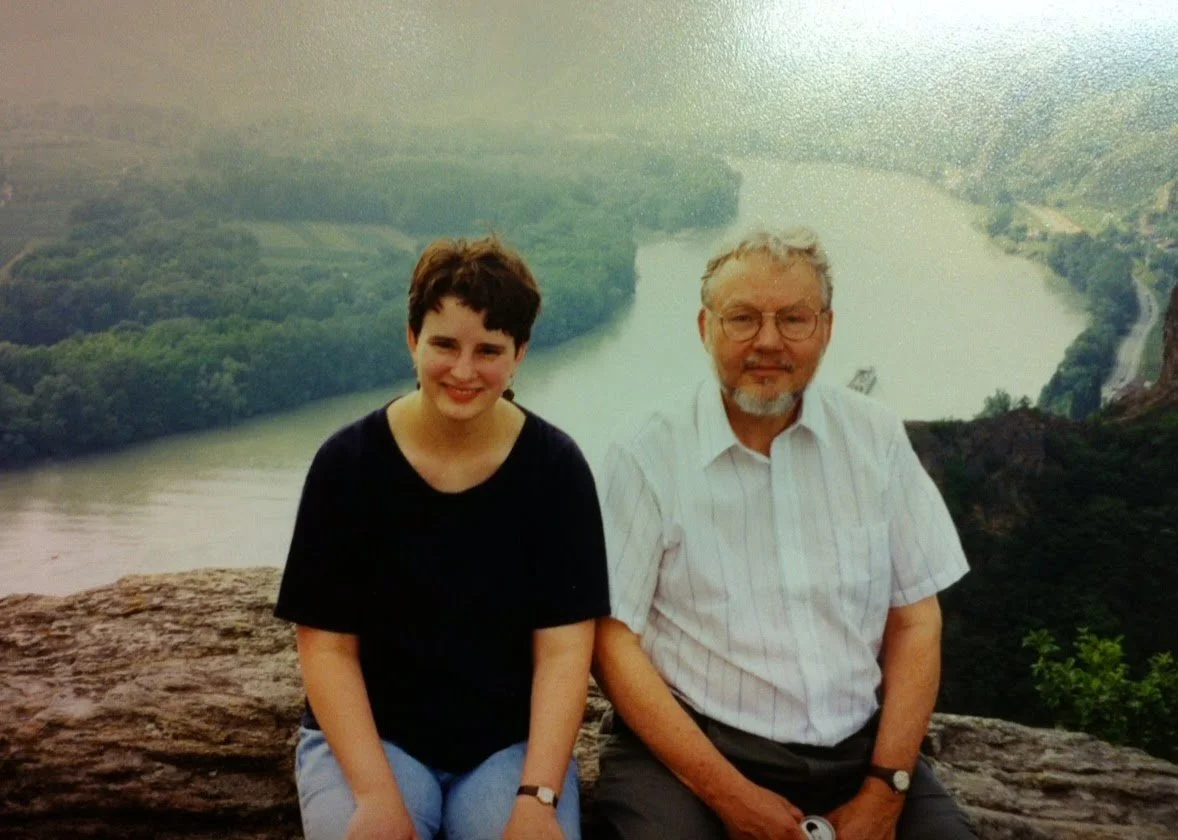
Someone snapped this picture of Dad and me with the Danube below us after we’d led our tour group up the steep hillside to the castle ruins in Dürnstein.
I watched the care with which my parents prepared the itinerary and lectures for the travel/study course. I saw how their well-chosen stories transformed a building or landscape. I learned that returning to a familiar place did not make it less interesting. Quite the contrary.
I also learned that my mother’s planned pauses were not empty spaces between the important parts of a trip. They were important parts of the trip.
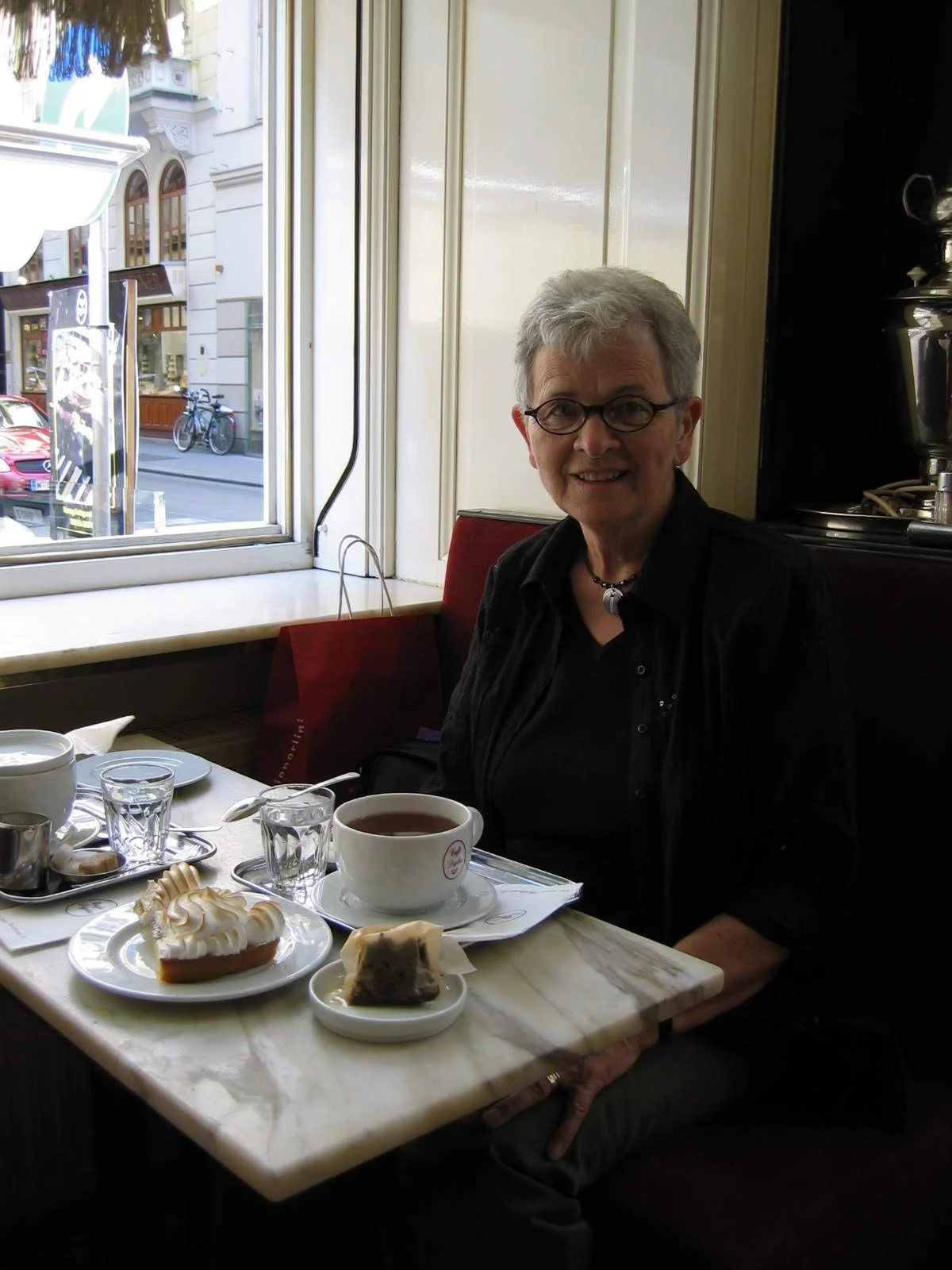
Enjoying tea and cake at Café Diglas, one of our favourite Viennese coffeehouses.
That particular lesson took Tim a little longer to embrace.
Back in North America on a long driving day, Tim’s natural instinct was to focus on reaching the destination as efficiently as possible. Mine was to notice the places we might encounter along the way. This was definitely an example set by parents over the years, although my mother had to train my father to enjoy taking time out.
One of my recurring disagreements with Tim involved the Wayside Inn in Middletown, Virginia. We have family in both Virginia and Ontario, so over the years we've spent many hours driving between the two. On the return trip to Canada, the inn is only about an hour from where we begin. To Tim, stopping there for breakfast made no sense at all. We'd barely started the day's drive.
To me, that was precisely the point.
Why rush past a historic Civil War inn with warmth, character, and a wonderful breakfast simply because it appeared too early on the route? The stop was not delaying the trip. It was part of the trip.
My parents had modelled this exact decision frequently on their drives between the two countries. In fact, they often made an equally baffling decision in Tim’s eyes: stopping at the same inn for dinner when they were only about an hour from their arrival in Virginia.
Over time, however, Tim learned to humour me. And I learned that the balance my parents modelled was not automatic or fixed. It was something each traveller—and each family—had to work out for themselves.
My father taught me to arrive curious and prepared.
My mother taught me to leave room for reflection.
Together, they showed me that travel can be more than movement through a series of destinations. It can educate us, deepen our understanding of other people, and help us recognize changes within ourselves.
I did not have the words for that philosophy when I was younger.
I am still finding the words now.
But I can see traces of both my parents in every journey I plan and in every story I tell: my father’s desire to share one more fascinating thing, and my mother’s reminder that we sometimes need to stop long enough to understand what we have already seen.
They taught me to value both the places and the pauses.
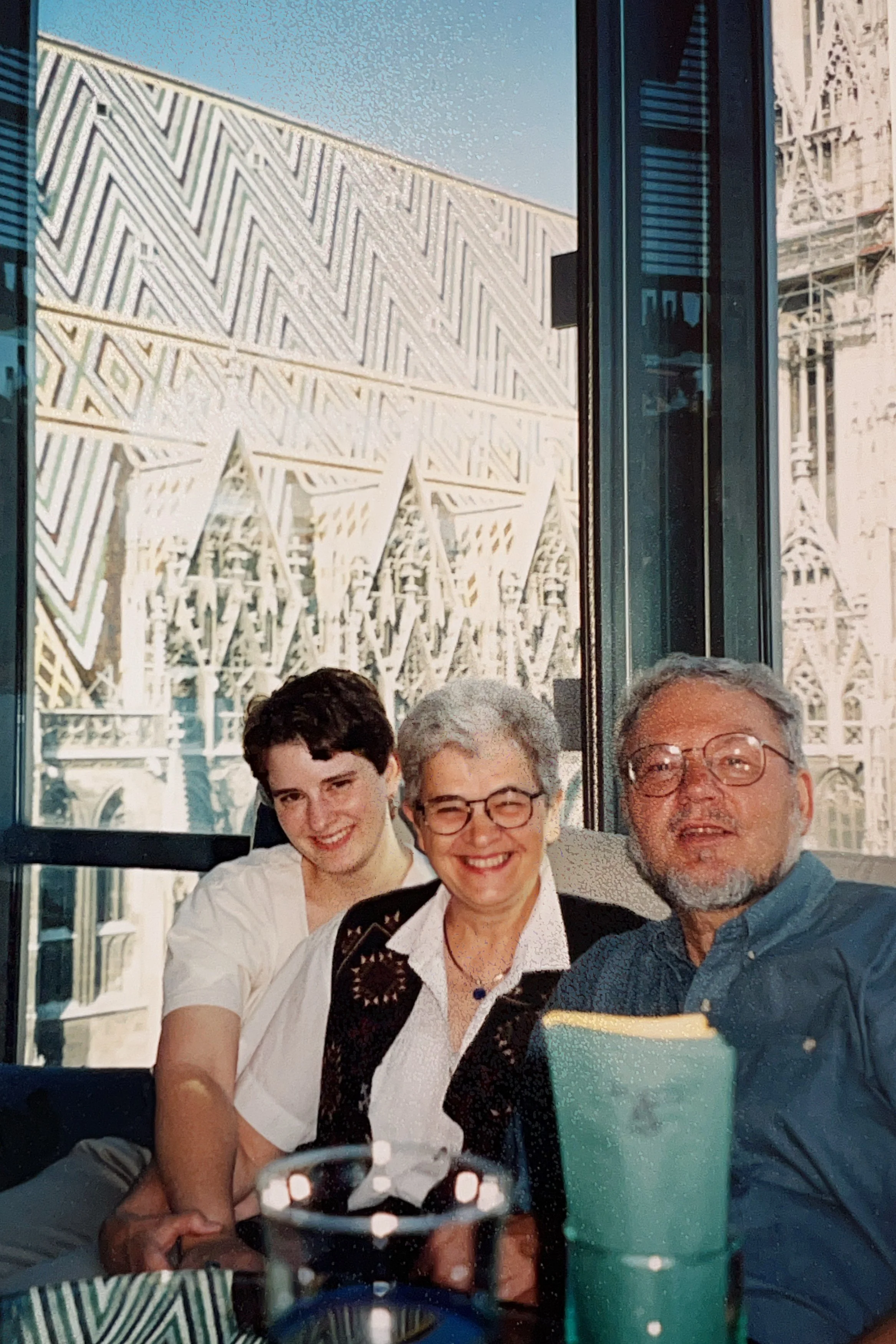
Together in Vienna, where so many of my travel lessons began.
